
Causeway row: Surgeons' groups demand 'clinically led' reform - as MP slams 'orchestrated campaign' against hospital
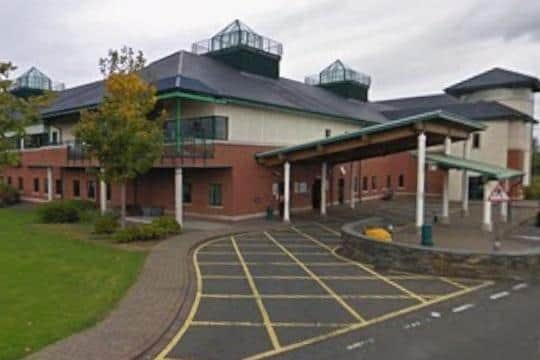
There is an “orchestrated campaign” against Causeway hospital, and the Northern Trust has been “talking down” to people dependant on its services, Jim Allister has said.
The North Antrim MP has also levelled that charge at a group of consultants from across the UK and Ireland, who have said such decisions about how surgical services are delivered should be “informed by clinical evidence, patient outcomes, workforce sustainability and population needs”.

The professional bodies also said while they recognised “the importance of public and political engagement” – decisions must be “grounded in the best available clinical evidence”.
The Northern Trust wants to shift emergency general surgery (EGS) from Causeway to Antrim Area hospital, arguing that spreading it over two sites is unsustainable. It says that was backed in an independent review which found that Antrim site “clinically and operationally appropriate”.
Health minister Mike Nesbitt quit over the issue a week ago, when his party leader Jon Burrows said he would never support EGS being removed from the County Londonderry hospital.
Surgeon Damian McKay told the BBC on Monday that surgeons are “concerned, disappointed and frustrated”, after last week’s events. Surgeons from the Association of Coloproctology of Great Britain and Ireland (ACPGBI), the Association of Upper Gastrointestinal Surgeons (AUGIS) and the Association of Surgeons of Great Britain and Ireland (ASGBI) signed a joint letter on the issue.
But Mr Allister has accused them of “talking down to those dependent on the services of Causeway Hospital” – saying that is not the way forward.
“This is what the Northern Trust has been doing for years. Consultants, like Mr McKay, doing the same is not helping. The Trust conducted a consultation, but brazenly ignored the outcome that less than 2% of respondents supported their plans.
“Moreover, the Trust has refused to publish the breakdown of responses from the more than 140 of its staff who responded to the consultation. Nor, has it published the data it claims justifies its proposal.
“It is all very well for the Trust to positively package everything as ‘reform’, but still never address the reality that Antrim Hospital already can’t cope, without adding general emergency surgery from Causeway.
“My constituents need hospital services, not lectures".
In 2024, a Department of Health report said that sites carrying out EGS must have the required number of surgeons with the required training and expertise to ensure best outcomes at all times. Amongst other criteria, it said the hospitals conducting the surgery must must have full access to theatres and critical care.
On staffing, the report – published by former UUP health minister Robin Swann – said the Emergency General Surgery team must be split from the elective surgery team and “the teams must be sufficient in size”.
The review identified a group of hospitals - Altnagelvin, Craigavon and Antrim Area hospitals - which could meet EGS standards “by putting processes or resources in place”.
It said Causeway (as well as Daisy Hill and South West Acute) needed “more fundamental change to how services were currently being delivered, including to service configuration and cross-organisational working to meet the standards”.
On Monday, ACPGBI, AUGIS, and ASGBI expressed concern over “recent developments in Northern Ireland that risk further delaying the implementation of the review” of EGS services in Northern Ireland.
The letter stated: “As the professional bodies representing surgeons across the United Kingdom and Ireland, we recognise the significant challenges facing surgical services in Northern Ireland. These challenges include persistent workforce pressures, difficulties in maintaining sustainable emergency services, and unacceptable delays in access to both emergency and elective surgical care. We are particularly concerned that Northern Ireland continues to experience some of the poorest cancer waiting time performance in the UK, with direct consequences for patients and healthcare staff.
“The review of Emergency General Surgery services (2022) was clinically led and developed following extensive engagement with healthcare professionals, service leaders and external stakeholders. Its recommendations reflect the realities of modern surgical practice and are consistent with the direction of travel seen across all four nations, whereby specialised and emergency services are organised in a manner that ensures patients have access to safe, timely, consultant-delivered care.
“The three Associations strongly support the principle that decisions regarding the configuration of surgical services should be informed by clinical evidence, patient outcomes, workforce sustainability and population needs. Whilst recognising the importance of public and political engagement in healthcare planning, we believe that long-term service transformation must remain grounded in the best available clinical evidence and prioritise the safety, sustainability and quality of patient care, both in elective and emergency settings.
“We therefore urge all stakeholders to work collaboratively to ensure that the recommendations arising from the Northern Ireland Emergency General Surgery Review can progress without further delay. Failure to modernise surgical services risks perpetuating existing workforce pressures, limiting access to care and widening inequalities in patient outcomes.
“We stand ready to support colleagues, healthcare organisations and decision-makers across Northern Ireland in advancing clinically led, evidence-based service reform and in delivering sustainable, high-quality surgical care for the patients and communities they serve”.
A Northern Trust spokesperson said: “The type of service change the Trust is proposing is subject to the Department of Health’s formal decision-making process. We remain committed to that process and will respect its outcome.
“Our priority is to ensure that the Trust’s general surgery service continues to be safe, stable and sustainable for our patients, staff and wider community.
“While we recognise the strength of feeling around our transformation proposals, the situation remains that the current model of providing emergency general surgery across our two acute sites is becoming increasingly unsustainable, and this was the basis of our Board’s recommendation in May 2025.
“We are also deeply aware of the concerns expressed by our surgical colleagues that it has become increasingly challenging to provide 24/7 emergency rota cover at both hospitals.
“The Trust’s proposal to transform General Surgery services has been informed by extensive clinical engagement and is in line with national policy, guidance and standards.
“As part of the development process, the Trust assessed its current service configuration against the Department of Health’s evidence-based standards for emergency and elective general surgery and concluded that our existing model requires transformation to meet the new standards. This assessment was undertaken in conjunction with the Trust’s surgical team.
“We also sought advice from GIRFT (Getting it Right First Time), a clinically led national NHS improvement programme which uses data, benchmarking and best practice to support safer, more sustainable services and better patient outcomes. GIRFT undertook an ‘Independent Review of the Proposed Reconfiguration of General Surgery’ in March 2026 – it found that the current status quo of emergency general surgery provision in the Northern Trust is not sustainable, and found that the proposed consolidation of emergency general surgery on the Antrim Area Hospital site is ‘clinically and operationally appropriate’.
“In the absence of a Ministerial decision, we will continue to do all we can as a Trust to ensure our general surgery service remains as safe and stable as possible, with patient safety our utmost priority. Our preference remains for a planned and managed change that will ensure we can avoid a service collapse”.