
Irish signs for split roads? Controversial vote looms over building only on Nationalist sections of 'long streets' versus plastering them over Unionist areas too, despite opposition
Two streets split between unionist and nationalist areas could see Irish signs only placed where they’re wanted – or run the entire length of them, against the wishes of one community.
Belfast council will tomorrow decide what to do with two places designated ‘long streets’, which are divided into sections that are overwhelmingly home to different communities with contrasting views of the signs.
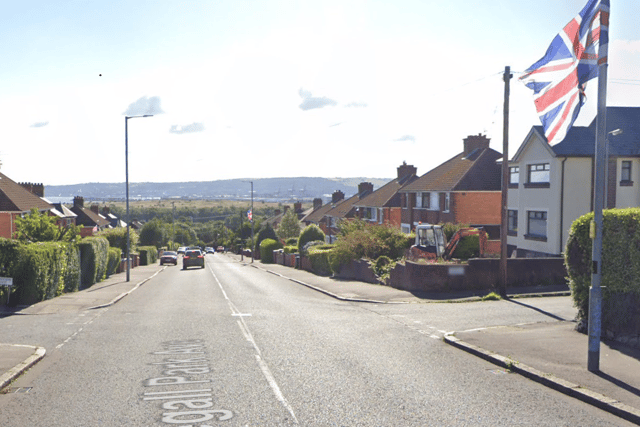

Both Donegall Park Avenue in the north of the city and Oldpark Road in its north-west crossed the council’s threshold for building dual language signs, with at least 15% of residents of each street in favour.
But as they each divide up into segments where there is enormous support for the move and others where there is enormous opposition, politicians are to make the final call on whether to only put them up in nationalist parts or plaster them through unionist areas as well.
Donegall Park Avenue is so split on the issue that at its junction with Antrim Road 64% are in favour while 9% are against, while at its junction with Shore Road at the opposite end of the street that flips to become just 10% supporting Irish signs and 57.5% opposed.
Areas in the middle shift from more in favour of Irish to more against, but not to the same extremes seen at either end.
Oldpark Road sees opposition at either end, with support in the middle; overall the main mood of that street seems to be indifference, however, as almost three-quarters of the 756 surveys issued didn’t get a reply.
The two ‘long streets’ are due to be debated at a committee meeting tomorrow night, which was originally meant to happen a fortnight ago but was put back amid anti-immigration protests and subsequent violence that followed a shocking knife attack.
Other bids are also to come up at the meeting, which is the first to be held since Sinn Fein demanded Belfast Council changes how it counts surveys on dual-language street signs.
Last month the nationalists argued everyone from council officials to politicians are “incorrect” to consider numbers of entire streets, insisting that only people who reply to surveys should be counted towards results.
The party’s logic would see Irish signs built on streets where fewer than one in 10 people want them, with council group leader Ciaran Beattie maintaining that if only a handful of people on a street reply to surveys but all of them back the signs, that should be regarded as “100% support”.
Tomorrow, five applications are due to be rejected as they failed to hit the council’s 15% threshold of support – but if Sinn Fein’s argument was accepted every one of them would pass, including a street in a heavily unionist part of east Belfast where five times as many people are opposed to Irish signs as are in favour.
On Willowfield Gardens, 8.7% of residents want Irish signs, while 44.9% are against them. Under Sinn Fein’s interpretation that only people who reply to the surveys should count, that changes to 15.7% in favour which would see them built.
Even before Mr Beattie’s argument, Sinn Fein had already started pushing Irish signs through on streets that failed to reach the threshold.