
Government won't change course on community sector funding despite Stormont objections
The government is not going to change the funding arrangements it has put in place for a scheme which community and voluntary sector organisations say will result on up to 400 redundancies, the News Letter understands.
Ministers have shifted funding to capital investment projects and away from “employment, skills and inclusion services” – as part of their latest bid to boost regional economies across the UK.

On Friday, the Northern Ireland Office (NIO) launched a consultation on the plans – but funding will be within the parameters it has already set out.
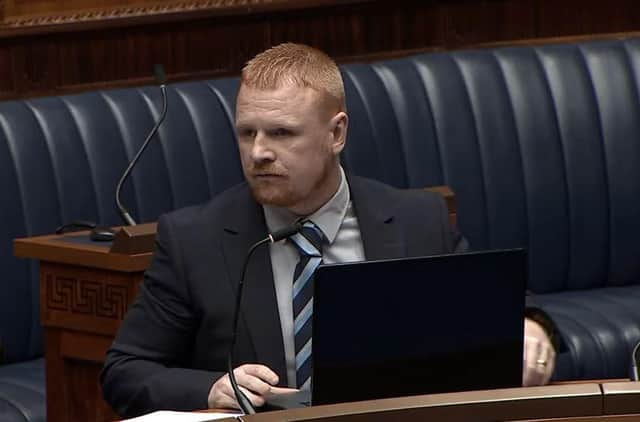
UUP MLA Andy Allen says the consultation “must be meaningful and it must be willing to respond to the evidence” and has urged the government to “pause” its plans.
£129 million is available for Northern Ireland from the three-year Local Growth Fund (LGF) scheme. However, the Executive is not happy that it will have to spend the bulk of that money on capital projects.
Local parties are united in their view that more of the money could be spent on existing schemes delivered by community and voluntary sector (CVS) organisations.
The government says the consultation is not about rebalancing the split for the Local Growth Fund – which would mean £27.4m to capital projects and £11.8m to resource projects.
Its position is that the consultation is to determine how the capital funding for 26/27 should be allocated, as well as how the capital and resource funding for the remainder of the spending review period should be allocated.
The LGF scheme replaces the UK Shared Prosperity Fund (UKSPF), which had a much greater focus on funding community projects aimed at improving economic inactivity. It was worth around £104m over three years, and delivered by the Ministry of Housing, Communities and Local Government (MHCLG) in London.
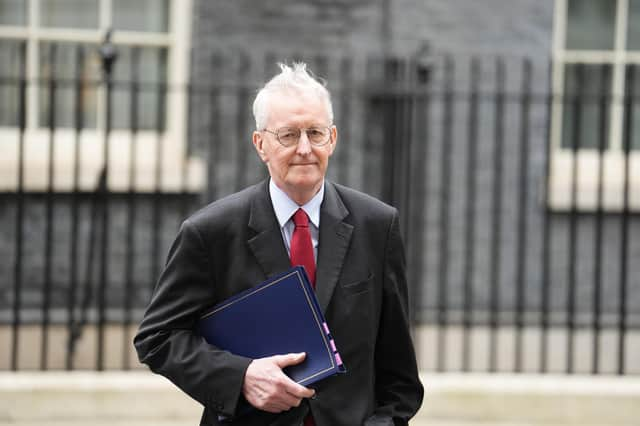
The NIO, led by Hilary Benn, says it will “work closely with the NI Executive” to design an investment plan for the LGF.
Andy Allen MLA, the UUP communities spokesperson, said the sector has “been overwhelmingly clear that the current capital-heavy approach” does not align with the “NI labour market challenges or reflect previous commitments to a bespoke model grounded in local need and evidence”.
The East Belfast MLA said the sector “is not opposing reform or investment” – but is “highlighting that a funding model weighted too heavily towards capital risks undermining the very frontline, people-based interventions that have delivered positive outcomes across communities for many years”.