
Kingsmills Massacre: Call for authorities to explain what they did with DNA evidence of IRA suspect
A call has been made for authorities to explain what they did with a DNA profile that could see an IRA gunmen linked to the Kingsmills Massacre prosecuted.
The IRA murdered 10 Protestant factory workers at Kingsmills in south Armagh in 1976 as they returned home from work. Nobody has ever been charged with the atrocity.
On Tuesday the police ombudsman for Northern Ireland reported that the original RUC investigation into the matter had a series of significant failures.
However she also noted the officers involved had been under intense pressure as it was the second most serious year of the Troubles for fatalities and detectives had been significantly under-resourced.
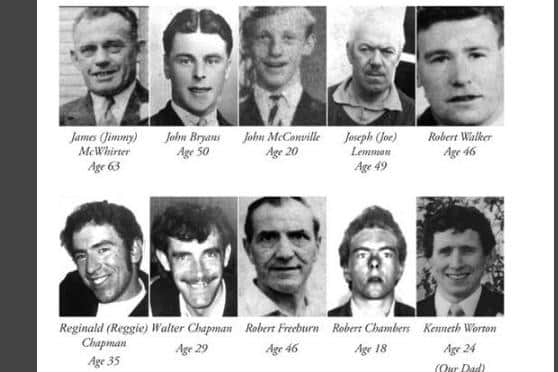

Now UUP justice spokesman Doug Beattie has called for on a DNA profile from a potential suspect to be given renewed attention.
In 2017 the legacy inquest into Kingsmills found that some of the same IRA weapons were used at the nearby Tullyvallen massacre four months previously and that at least one suspect, S54, was involved in both attacks.
IRA gunmen had burst into Tullyvallen Orange Hall and opened fire, killing five men, with a sixth later dying from his injuries.
A cap left behind by one of the gunmen came to light during the Kingsmills inquest. It was found to contain two hairs which were sent for DNA analysis.
The inquest heard that the hairs could not be linked directly to Kingsmills but that it could see a suspect – who may have been involved in Kingsmills – prosecuted for Tullyvallen.
The inquest heard that a forensic report was provided to the coroner about DNA from the hairs.
However the results were never discussed during the inquest, nor in the coroner's 318-page final report.
Asked for an update on the case in 2022, the Coroners Legacy Inquest Unit said that all Kingsmills relatives were informed in 2017 that the coroner had received the report but that it was “not potentially relevant” to Kingmills.
Asked to comment in 2022, police said that “following DNA testing of the hair no evidential opportunities capable of progressing the investigation were identified".
The News Letter asked to talk to a detective about what that meant – did they not have DNA of the suspect on file? – but police declined.
In 2022 one of the Orangemen who survived the Tullyvallen attack, Berry Reaney, told the News Letter that five years after the hairs were DNA tested, none of the Tullyvallen families had been contacted by police about the hairs and DNA profile.
Now Mr Beattie has called for the findings in the DNA report to be made public.
“The appalling murders at Tullyvallen Orange Hall were perpetrated by individuals who used the same weapons as those who committed the sectarian murder at Kingsmills.
“There was DNA testing conducted on the hair strands from Tullyvallen and yet the evidence gleaned from the test was never made public by either the coroner or the police.
“The families were never informed about the evidence and the leads it produced and were never told why no action was taken following the test results. This is the opposite of transparency and needs to be challenged by the justice system.”
The office of the Lord Chief Justice responded that since the inquest closed any further investigations are a matter for the PSNI.
The PSNI responded that since May 2024 the only body with power to review Troubles murders is the Independent Commission for Reconciliation and Information Recovery (ICRIR).