
Northern Ireland Humanists say Supreme Court ruling on Christian school assemblies in Northern Ireland could impact all of UK
The highest court in the UK will tomorrow rule on whether Christian based school assemblies in Northern Ireland breach the human rights of children who do not hold such beliefs.
In May the Supreme Court heard an appeal on the legality of Religious Education in Northern Ireland schools.
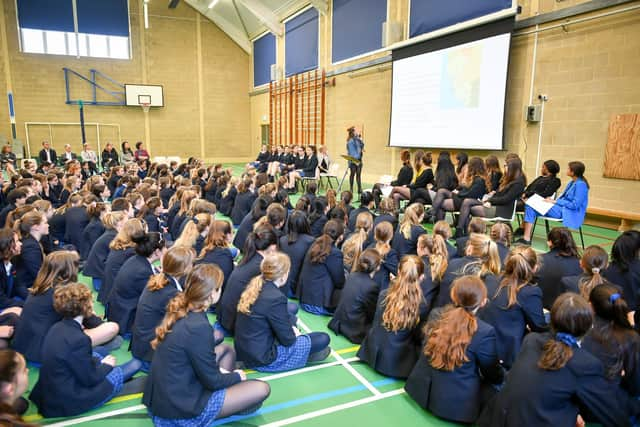

A young child, JR87, and her father, sought to challenge the mandatory Christian religious education and collective worship in schools.
Their case was won at the Northern Ireland High Court, but then lost at the Court of Appeal. The family then appealed to the Supreme Court which heard it in May this year.
In 2022 the High Court ruled in favour of the child's family after they expressed concern that the focus on Christianity meant their child might adopt a Christian worldview, claiming there was no meaningful alternative teaching in the Province’s state-funded primary schools.
However in May last year the Court of Appeal overturned that decision, concluding that exclusively Christian religious education in Northern Irish primary schools was legal.
The Department of Education had argued that the parents are able to withdraw their children from this teaching, and that there is already scope for teaching on other religions and worldviews in the existing curriculum.
While the senior judges upheld the earlier ruling that there is a lack of pluralism in the core curriculum, they said no human rights had been violated because parents had the “unqualified statutory right” to withdraw their children from both RE lessons and collective worship – which they had not done.
The family then appealed the Court of Appeal decision to the Supreme court, which heard the case in May.
Speaking ahead of today's ruling by the Supreme Court on the matter, NI Humanists drew attention to the gravity of the case.
"This case, known as JR87, could have significant implications for education in Northern Ireland – and potentially the rest of the UK as well," said Boyd Sleator, NI Humanists Coordinator,
"The appeal was brought by a non-religious father and his child who argued that the exclusively Christian RE curriculum and collective worship requirements in Northern Ireland breach their rights under Article 2 of the First Protocol to the European Convention of Human Rights (ECHR)."
They added: "Northern Ireland Humanists, which has long campaigned for inclusive education and intervened in the case before the Court of Appeal, will be commenting in full after the ruling is published and its wider implications are clear."
In the mid 20th century, churches owned and ran many of the schools across NI. They later passed hundreds into the trust of the Northern Ireland government, on formal conditions that they maintained an influence in their ethos, which they do up until today.
The Transferor Representatives’ Council, which represents the Church of Ireland, Presbyterian Church in Ireland and Methodist Church in Ireland, intervened in the case.
Speaking in May, Dr Andy Brown, Chair of the Transferor Representatives’ Council, said: The teaching of RE is "a vital component of the primary curriculum in Northern Ireland, an area in which children are able to explore and consider life’s big questions, in preparation for life outside the classroom.”
The Transferors Representative Council and Department of Education were invited to comment.
The Supreme Court said that judgement will be handed down on 19 November at 9:45am