
Presbyterian Church in Ireland safeguarding scandal began after conviction for child sex offences
The crisis rocking the Presbyterian Church began following the conviction of an individual for child sex offences.
Asked what prompted the safeguarding investigation, Church Convenor Rev David Bruce said their attention was drawn to an individual who had been convicted of crimes – confirmed by police to be child sex offences.
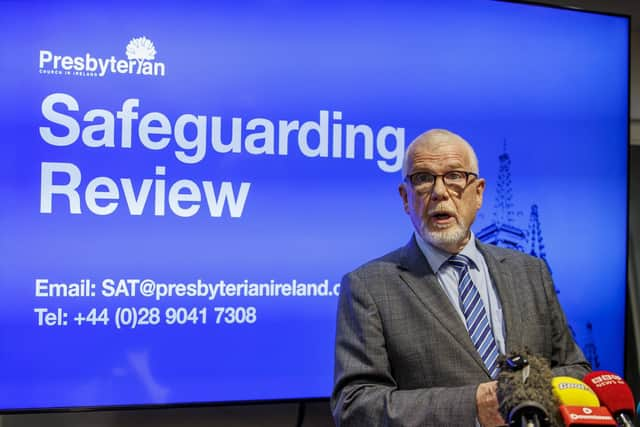

"It transpired that he had connections with the Presbyterian congregation and the police service suggested that we would look into this,” he said.
Speaking to the BBC’s William Crawley in recent days, he continued: "Once we had begun to look into this, we discovered that our systemic problems were more than merely the issues that were presented in this particular case, and as a consequence of that, we extended the remit of our work to examine from a root and branch point of view, our entire safeguarding practice."
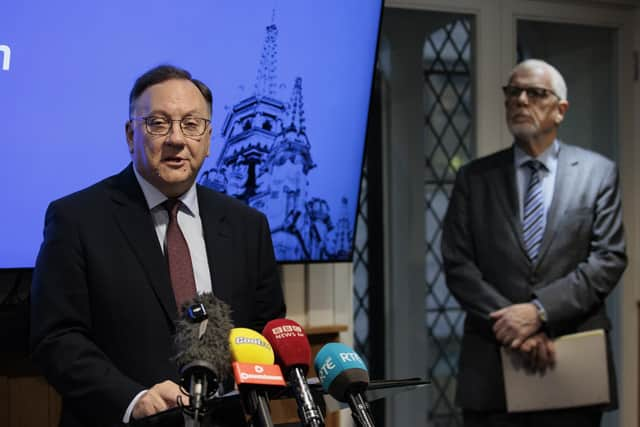
On Wednesday, Moderator Rev Trevor Gribben announced that he is resigning because he was the administrative leader of the church when serious safeguarding failures took place from 2009-2022.
(The church told the News Letter that its constitution requires the previous moderator, Rev Richard Murray, to step back into the role until June 2026 and that Rev Gribben will stand down at the end of this month.)
The church does not know how many people were harmed but say it is "low single figure digits".
It has set up a response line for others to come forward.
Records of alleged abuse were not kept, which Rev Bruce agreed on the BBC was "outrageous", adding that it is "very easy for an institution to become culturally lazy".
Rev Bruce, who was moderator in 2021, said a statutory body, the Safeguarding Board for Northern Ireland, has already been asked to do a complete audit of the church.
It was not a mistake to install Rev Gribben as moderator in June, said Rev Bruce, because the information available today was not available then.
The church's own investigation report will not be published because it identifies individuals, congregations and live cases, he said.
All the "salient" points were published in his statement to the media on Wednesday, he added.
Asked if the church had failed in mandatory reporting to outside authorities, Rev Bruce told the BBC that they "conform to regulatory principles".
"If there are examples of failings which are illegal, that will be a matter for the police and the courts," he added.
The News Letter asked the church for a timetable on how and when it will address the failures and provide transparency. It replied that "it hopes to make an announcement in the coming days".
Detective Chief Superintendent Zoe McKee, head of the PSNI’s Public Protection Branch, said: “The Police Service of Northern Ireland has been actively engaged in ongoing discussions with the Presbyterian Church in Ireland (PCI) to ensure that mechanisms are in place to support any victim who wishes to make disclosures.
Police said the these discussions “followed concerns raised by PCI following the conviction of an individual in 2024 for child sexual offences”.
She added: “The PSNI remains committed to working in partnership with all relevant agencies and organisations to ensure that robust safeguarding measures are in place to protect vulnerable individuals.”
“If you or anyone you know are concerned or wish to report a crime to police, we have dedicated detectives trained to investigate and support all victims of abuse.
“Please come forward by calling 101 or a report can be submitted online using the non-emergency reporting form at www.psni.police.uk/makeareport/ “.
The Charity Commission gave the News Letter a series of actions it normally expects of any charity after historic safeguarding failures. They are;-
:: Ensure that all relevant statutory bodies and regulators are informed
:: Ensure victims know how to report additional concerns and access support
:: Review internal safeguarding policies, procedures and controls to prevent recurrence
:: Communicate openly with stakeholders while respecting confidentiality and legal considerations