
PSNI does not deny cleric's claims that openly carrying a Bible in Northern Ireland hospitals could be criminal
A Methodist minister has said clergy could be committing a criminal offence by openly carrying a Bible in any hospital covered by an abortion protest buffer zone.
Pastor Jonathan Campbell of Newbuildings Independent Methodist Church in Londonderry said he was deeply concerned about the possibility.

The issue arose after police gave the Policing Board guidance on how the Safe Access Zone legislation applies at hospitals with abortion clinics.
The concerns follow the conviction of retired Strabane pastor Clive Johnston, who was found guilty of breaching buffer zone legislation after preaching a Christian sermon in the grounds of Causeway Hospital in 2024, despite making no reference to abortion.

The News Letter understands several clergy have since written to the PSNI expressing concern about whether routine pastoral duties at hospitals with abortion clinics could leave them open to criminal investigation.
Safe Access Zones are in place around hospitals in Craigavon, Newry, Coleraine, Londonderry, Lisburn and Dundonald, as well as two Belfast abortion clinics.
At a recent Policing Board meeting, member Patrick Nelson asked police how the legislation affected routine chaplaincy work, including praying with patients, reading scripture with them, carrying Bibles, pastoral ministry and visible religious practice.
Police gave essentially the same response to each question, saying "the lawfulness of any activity depended on whether it could reasonably influence, cause distress to, or impede" a protected patient or member of staff nearby.
"The Act applies to all conduct within a Safe Access Zone regardless of its nature or purpose," police added.
Police also stressed there are no exemptions for clergy carrying out religious duties.
"Describing conduct as pastoral, prayerful or religious in nature does not determine whether an offence has been committed,” police added.
The legislation makes it an offence to act "in a way that influences, prevents access for, or causes harassment, alarm or distress to a person attending for abortion services – whether directly or indirectly".
Police also told the Policing Board that "the vast majority of hospital chaplaincy and pastoral ministry is entirely unaffected" and that "most hospital wards and clinical areas fall entirely out of the scope of the Act".
However when asked, the PSNI failed to explain how they had construed such apparent exemptions when the Access Zones cover the entire hospital estates.
Pastor Campbell said: "It is unthinkable that the Bible, or even clerical dress, could be off-limits on hospital grounds because someone might find it offensive.
"The Christian message is one of hope and comfort to those who are ill, worried and grieving. It cannot be the case that in Northern Ireland church representatives are unable to comfort those in need."
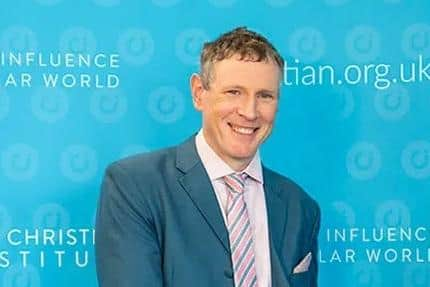
Ciarán Kelly, director of The Christian Institute, which is supporting Pastor Clive Johnston's appeal, said the guidance suggested "someone simply carrying a Bible through certain parts of a hospital could face a criminal investigation".
A PSNI spokesperson did not directly challenge their claims, but said any complaints made against clergy would be examined on a case-basis against the Safe Access Zone legislation.
Instead they said police are "not seeking to police religion or lawful pastoral care" and that people "retained rights to freedom of religion and expression".
However they added that those rights were "not absolute" and must be balanced against the protections contained in the legislation.
The spokesperson explained that whether any conduct amounted to an offence required a case-by-case assessment under the Act and was "not determined solely by the presence of religious materials or the identity or role of the person involved".
Decisions on prosecution are a matter for the Public Prosecution Service and the courts, they added.