
Removal of Irish Sea border posts will be 'litmus test' of government's trade deal with the EU - Allister
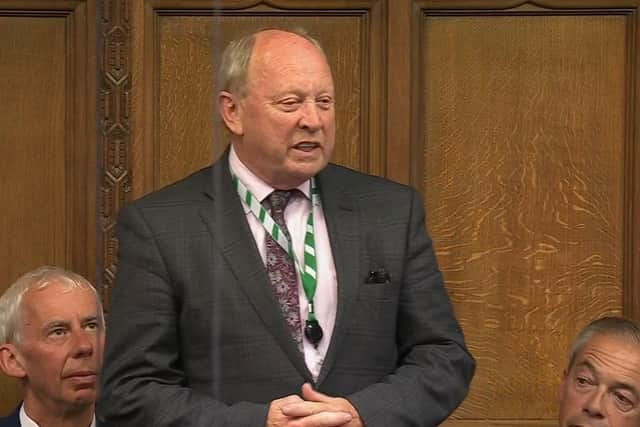
The litmus test for the success of the government’s latest trade deal with the European Union is whether border posts erected in Northern Ireland are removed, Jim Allister has said.
The TUV leader’s comments come as the Secretary of State Hilary Benn meets EU Commissioner Maroš Šefčovič today on “the benefits for Northern Ireland” in the recent deal.

Last month, Brussels and London signed an SPS deal which means the UK will follow EU rules on animal and plant health, greatly reducing the needs for checks on GB goods entering the EU, and by extension Northern Ireland, which remains in the bloc’s single market.
However, Mr Allister is not satisfied with the government’s response to a question he tabled in Westminster on what function will the border posts at Northern Ireland’s ports will perform in light of the agreement.
Nick Thomas-Symonds, Minister for the Cabinet Office, said it will “depend on the final shape of a deal” but said the government’s “priority is to reduce barriers to trade and red tape at the border”.
The TUV leader said the £190m “extravagant spend on Irish Sea border posts at Northern Ireland’s ports was said to be to facilitate the SPS checks demanded by the Protocol/Windsor Framework.
The North Antrim MP said the government had proclaimed iots deal would “remove SPS checks” – with the logic that “the border posts would not be needed”.
“The answer, far from confirming redundancy for the border posts, reveals there is actually no deal to this effect. Instead what the government is now saying is that all depends on “the final shape of the deal”. So much for the boasts of a breakthrough deal.
“It is clearly not much of a deal if the border posts stay. That is the litmus test. Once more, I suspect, we are in the realms of smoke and mirrors when it comes to proclaimed deals with the EU and any expectation of Brussels loosening its grip.”
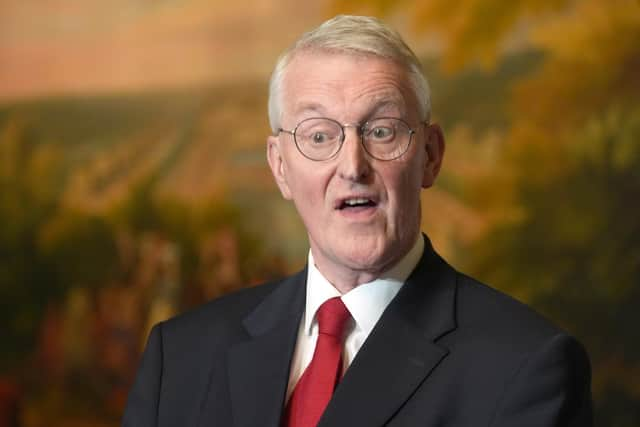
Speaking ahead of his meeting with Mr Šefčovi, Hilary Benn said the deal would “facilitate the smooth flow of agrifood and plants from GB to NI and protect the UK’s internal market”.
He said NI would continue to enjoy “a key competitive advantage” in trade.