
Thatcher viewed SDLP's attitude to Anglo Irish Agreement as 'unreasonable' - slamming their failure to attend Catholic security force funerals
Margaret Thatcher expressed frustration at the “unreasonable” attitude of the SDLP to the Anglo Irish Agreement, questioning the party’s attitude to devolution and its failure to support the security services, documents from the period show.
The former Prime Minister also criticised Mr Hume’s decision to fly to the Philippines during a key period for talks following the UK-Ireland accord in the mid-1980S.
The comments are contained in a note of a meeting in February 1986 between Mrs Thatcher and then-Taoiseach Garret Fitzgerald – where the role of the SDLP in any future deal was discussed. Both sides assessed the progress of the 1985 deal, which had for the first time given Dublin an advisory role in relation to NI.
The Prime Minister recalled “a positive statement” about the SDLP’s willingness to take part in discussions on devolution. However, she believed that subsequently the party “had done nothing to follow this up”.
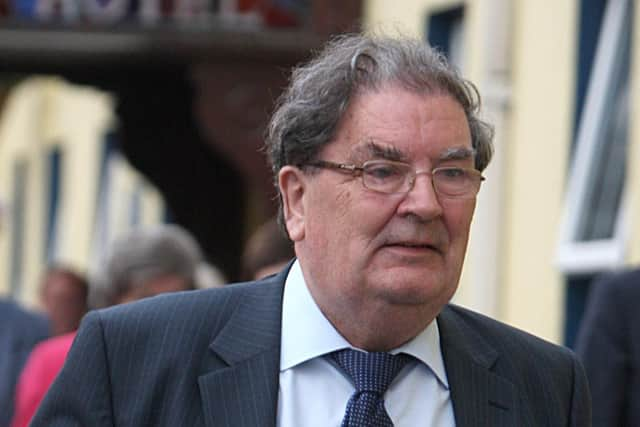

“Not only had they failed to live up to expectations on devolution, they had done nothing to support the security forces or even attend funerals of Roman Catholic members of them who had been killed by terrorists. Indeed she was tempted to say that we might just as well never have had the Agreement for all the difference it had made to the SDLP's behaviour”, the minutes note.
The PM said it was widely believed that the SDLP “preferred the existing situation with the Intergovernmental Conference to devolution”.
Officials summed up her view as: “Mr Hume had made matters worse by disappearing to the Philippines for a long period at the crucial moment and had not even been in the House of Commons to welcome his new SDLP colleague. Surely the Anglo/Irish Agreement should have meant more to him than observing elections in the Philippines”.
Mrs Thatcher questioned Dr Fitzgerald on whether the SDLP leader was serious in his desire for talks on devolution. The Taoiseach agreed that it would have been better if Mr Hume had not gone off to the Philippines – saying he had tried to dissuade him.
“But Mr Hume had made quite clear that he was ready to take part in discussions without conditions”, the Irish PM believed.