
TUV, SF and Alliance decry fresh pay hike for MLAs with future rises tied to average worker's pay packet - public invited to voice views
MLAs are in line for another pay rise, with the basic salary for an Assembly member expected to jump by over £2,000 – something which has been attacked by the TUV, Sinn Fein and the Alliance Party.
Alliance deputy leader Eoin Tennyson called the planned rise – which has been recommended by a non-party political three-man panel rather than by MLAs themselves – “embarassing”, given that MLA pay shot up by over a quarter just five months ago, and told the panel to “just stop”.
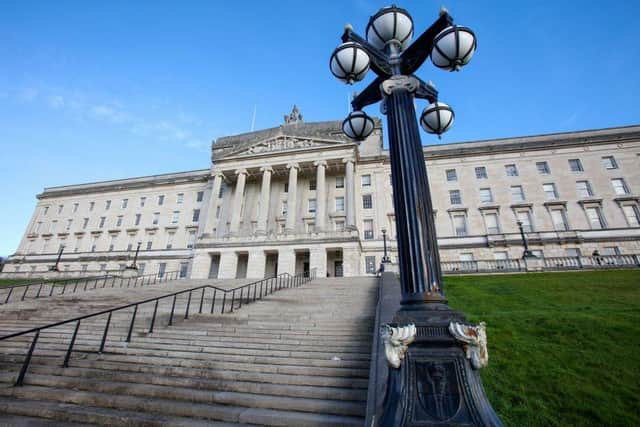

The TUV issued a statement saying the mooted rise “exposes how detached Stormont’s priorities have become from those of the public,” noting that MLAs on the Executive have not even been able to agree a budget.
And Sinn Fein’s regional leader Michelle O’Neill called it “grotesque”.
In addition to the £2,000 hike, further yearly rises are envisaged, tied to rises in the typical wage earned by an ordinary worker.
The plan is now out to general consultation.
MLAs right now earn a basic salary of £67,200, with top-ups for office-holders like ministers.
Before April their basic pay was £53,000, but then it jumped by 27% at a stroke at the behest of the Independent Remuneration Board.
The board, which was created in 2025, said that 27% jump had been a neccessary “corrective measure” because there had not been a significant pay rise for MLAs in the preceding several years.
Now the board has determined that, as soon as the Assembly sits after the upcoming election in May 2027, MLAs’ basic pay should go from £67,200 to £69,216.
That is a rise of 3%.
Inflation (as measured by the Consumer Prices Index) stood at 3.1% in the 12 months up to August, up from 2.9% the previous month.
The board also envisages “future annual adjustments” in MLAs’ pay, “determined by earnings growth, but limited by a 3% cap”.
In other words, if the median weekly wage of a full time worker increases by 2.5% over the year, then MLAs’ pay will increase by the same amount too.
If the median wage goes up by 4% however, MLAs will only see a rise of 3%.
In addition, the board has said that the top-up payments for MLAs in senior positions should remain unchanged (£38,000 for ministers and the speaker, and £72,000 for the first and deputy first ministers).
The TUV told the News Letter: “The Executive has not even agreed a budget, yet MLAs are already being lined up for another pay rise.
"That exposes how detached Stormont’s priorities have become from those of the public.
"Hospitals, schools and other vital services do not know what funding they will receive, but MLAs are being offered certainty about their own salaries.”
It added: “This proposal also builds upon the unjustifiable 27% pay increase which MLAs received earlier this year.
"TUV opposed that increase, voted against it at every stage and proposed a series of amendments, all of which were rejected...
“Until the Executive parties produce a budget and begin delivering functioning government, there can be little public justification for another MLA pay rise.”
Mr Tennyson said MLAs were “more than adequately paid” already.
“I see no coherent cogent, rational argument for MLAs to be afforded yet another pay rise, there is just no justification for it,” he said.
“We have consistently said that MLA pay should be linked to public sector pay, and we have nurses, teachers, doctors and civil servants out there who haven’t even got their pay rise for this year that they are entitled to, so I would send a very direct message to the pay review body, please just stop, because this does nothing to engender confidence in politics.”
Ms O’Neill said: “Sinn Fein is strongly opposed to a pay increase for MLAs.
"It is grotesque and it should not be paid.
"Sinn Fein will be responding to the consultation to strongly reject the pay rise proposal.”
When the Assembly first started out in 1998, the standard salary for an MLA was £22,457.
According to the Bank of England’s inflation calculator, £22,457 would be worth £45,256 today when adjusted for inflation, which has averaged out at about 2.5% annually between 1998 and now.
The three-man board that makes the salary decisions is made up of Alan Lowry, boss of a furniture firm and NI chairman of the Federation of Small Businesses, Craig Griffiths, a former lawyer to the Welsh Parliament, and Robert Herron, a Presbyterian minister.
Mr Lowry, the board chairman, said: “MLAs carry out a wide range of important duties, from representing constituents and scrutinising legislation to holding ministers and departments to account.
“It is right that their remuneration recognises the complexity and importance of those responsibilities, while ensuring that financial considerations do not discourage people from seeking elected office.
“As we look ahead to the Assembly election next year and the start of a new mandate, it is important that we put in place a structured and transparent mechanism that links MLA pay to changes in earnings in Northern Ireland.
"This approach ensures that pay remains aligned with wider developments in society, while providing certainty and maintaining public confidence in the process.”
The board will now consult with MLAs and the general public.
The public can send in their views via the Assembly website at this link.