
UK Budget: Stormont cash for rates relief must be spent on local scheme to help struggling businesses - Retail NI
Money Stormont is to receive as a result of a government scheme to cut rates for businesses in England must be spent on an equivalent scheme here, a business organisation has warned.
Retail NI says that struggling local businesses are getting “nowhere near” the support that is being provided to their counterparts in other parts of the UK.
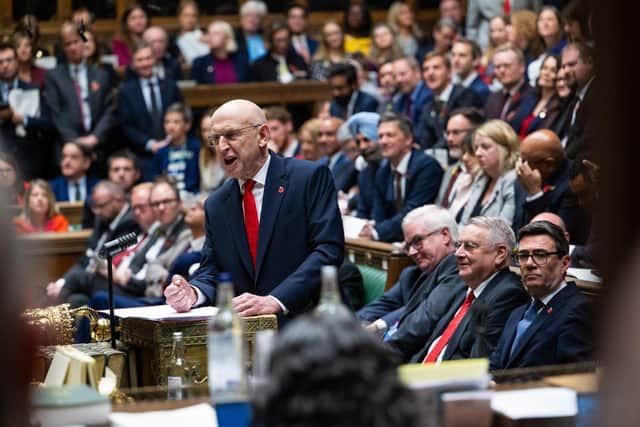

Its Chief Executive Glyn Roberts says he wants all parties in the Northern Ireland Executive to support the money being used for a bespoke scheme here.
Stormont’s Department of Finance (DoF) says any extra money received will be allocated through the general budget process, and has pointed to previous local schemes to reduce the burden on businesses.
The Executive parties have yet to agree a budget, with the Secretary of State warning that it will therefore not be able to receive additional funds as a result of the UK Budget on Wednesday.
The UK government says £131m is available in the next financial year as a result of its national spending plans. In Wednesday’s Budget the Chancellor revealed that on top of the extra 20% business rates cut for pubs and all but the largest live music venues, announced in July, “around 70,000 more retail, hospitality and leisure businesses out of business rates” in England.
This is to be done by increasing the Small Business Rates Relief threshold. Ministers say as a result, half of all retail, hospitality and leisure properties in England will pay no business rates.
The Chancellor has also announced a two-year real-terms freeze in business rates bills for all retail, hospitality and leisure properties.
The News Letter asked Stormont’s finance department (DoF) what is being considered for NI in response to the Chancellor's announcement that around 70,000 small retail, hospitality and leisure businesses in England will be taken out of paying business rates altogether.
A spokesperson for the Department of Finance said: “Any Barnett consequential funding received through today’s Budget will be allocated as part of the overall budget process.
“The Finance Minister is committed to supporting small businesses, the backbone of our local economy, and announced the extension of the Small Business Rate Relief (SBRR) and Back in Business schemes earlier this year. He also set aside £10million in his Draft Budget proposals to further enhance the scope of the SBRR and hopes to see this support agreed as part of the budget process.”
The Back in Business rate support scheme was created to incentivise business ratepayers to consider occupying retail premises which are currently unoccupied when looking for business premises, and has been available since April 2024.
The SBRR has been extended for another year covering the 2026-27 rating year, and provides different levels of rate relief depending on the Net Annual Value of the business property. For example, properties with a NAV of £2,000 or less will receive a reduction of 50% rate relief
Glyn Roberts told the News Letter it is “crucially important” that the Barnett consequential from the UK budget is spent on rates relief in Northern Ireland.
“We're at a crisis point in relation to businesses that are struggling to pay the rates bill, and many of our members are asking why on earth English independent retailers, hospitality businesses and other small businesses are getting this rates relief, and we're getting nowhere near the same type of rates relief?
“There's been various times in the past where Northern Ireland has got money from rates relief in England, and it wasn't spent on that. This time, it's crucially important that it is spent on that because our members are paying amongst the highest business rates anywhere in the UK.
“The cost of rates is crippling. It is holding back our economy. It is directly contributing to businesses closing, high streets declining.
“It is crucially important that this money spent on supporting small businesses with their their rates bills”, he said.