
No gridlock-busting Christmas bus or train fare cuts, say officials, amid fears last year's Belfast traffic jams will repeat as Grand Central construction drags on
Officials have blocked a call to cut bus and train fares in the run-up to Christmas, amid fears Belfast is in for a second year of gridlock from the continuing construction of Grand Central Station.
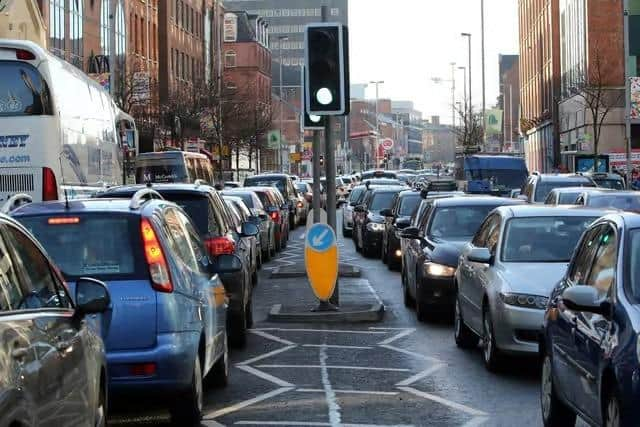
Last year, traffic jams regularly brought the heart of the capital to a standstill, as already busy routes saw even more traffic thrown onto them by road closures connected to building work at Grand Central.

That construction work is still ongoing, with street work connected to the £340m project now predicted to last until April of next year.
Fearing a repeat of the gridlock seen from late October through December last year, the city’s council asked officials in Translink and the Department for Infrastructure (DfI) to cut fares in a bid to encourage more people to use public transport rather than take the car.
Translink told them fare prices are a matter for the DfI; the DfI said they aren’t going to do it.
Instead of taking the step of temporarily cutting the price of buses and trains, the Stormont body’s officials plan “a number of traffic measures” plus a publicity campaign.
In a letter to the council, seen by the News Letter, Infrastructure Minister Liz Kimmins states: “There are currently no plans to introduce festive fares on Translink services.
“However, as public realm work continues around Grand Central Station, I have instructed my officials to advance a number of traffic measures to keep Belfast moving, particularly in the run-up to the busy festive period.
“A communications strategy has also been developed to help inform the public of the various measures being taken and to promote alternatives to private car use across the north.”
Meanwhile Translink’s chief executive, Chris Conway, stated that what he described as “a wide range of good-value ticketing options” are already available.
“For example, unlimited all-day travel on Metro services across Belfast is available for just £4, with contactless payment options making journeys even more accessible,” he told the council, in reply to the fare cut request.
“We also remain committed to collaborating with a broad range of stakeholders to encourage modal shift to public transport and help more people enjoy all that Belfast has to offer throughout the festive period.”
The council is to debate the fare cut refusal tomorrow morning.
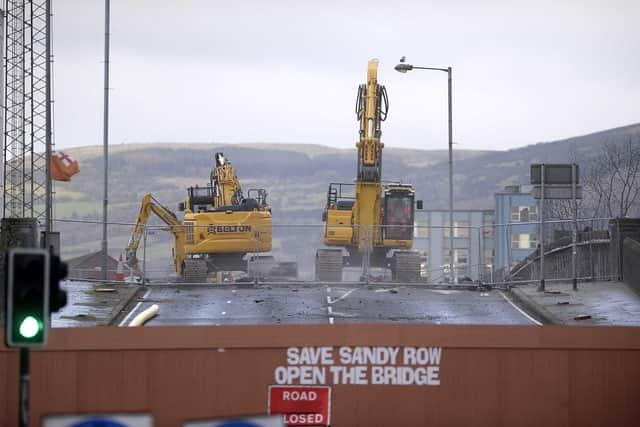
Last year’s chaos was sparked by the closure of Durham Street in October to facilitate the demolition of the Boyne Bridge, a process that was forecast to last around a year.
Shops in neighbouring Sandy Row complained their businesses were decimated by the move, and it also threw huge amounts of traffic onto nearby streets in the city centre.
Those roads, already busy with commuters, became gridlocked as the run-up to Christmas and arrival of wintry weather brought large amounts of traffic onto now much busier streets that struggled to cope with demand.
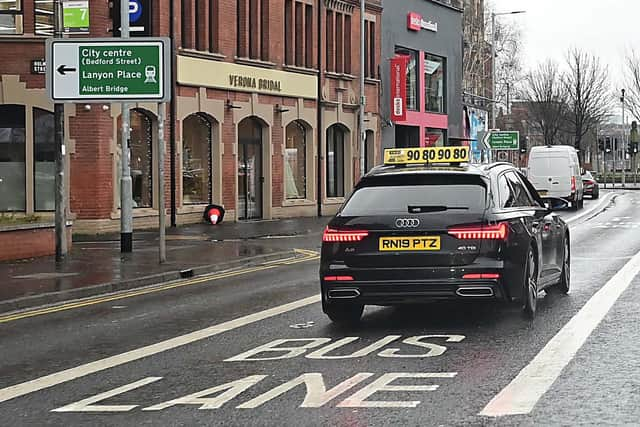
Business bosses and commuters alike pleaded for action as chaos dragged on, week after week; officials eventually allowed taxis to use bus lanes in a bid to bust the gridlock, but only on four streets that effectively formed a loop.
Last month, Ms Kimmins predicted Durham Street would reopen “towards the end of November”, adding that taxis “will continue to use the bus lanes”.