
A tale of two minds: Losing a loved one to mental illness
What images spring to mind when you think of the mental illness Schizophrenia? Do you think of someone with two personalities – Jekyll and Hyde? What about, a crazy person roaming the streets with a knife ready to stab innocent bystanders? Perhaps it is someone mumbling and talking to themselves?
Schizophrenia is a serious mental disorder that affects a person’s ability to think, feel, and behave clearly. There are a range of symptoms that can include delusions, hallucinations, disorganized speech and behaviour, and difficulty in thinking clearly. Schizophrenia does not have a single cause but is thought to be a result of a complex interplay of genetics, brain chemistry, and environmental factors. It is a chronic condition that requires lifelong management.
I never really thought about the illness until it arrived in my family and devastated the relationships and connection with a much-loved family member. In the past eight plus years we have watched the change in personality and behaviour of someone who we once laughed with and enjoyed a close bond with.
Long gone was the funny character who would send videos of themselves singing along to the radio or the dedicated football fan who loved to kick a ball around with their nieces and nephews. The strong, independant character who had a full-time job, a fiancé, a home and everything going for them is now a lonely, unemployed, aggressive and angry person who believes their family is not their family and instead are people who are part of a plan to keep “the truth” from them.


Maybe there were warning signs as a teenager – paranoia and irritability but it was easy to see these as personality traits and think that it was typical teenage behaviour. There was the odd “strange” thing that they would say or the rapidly increasing belief in conspiracy theories and illuminati that would make you think – “oh, they’re becoming a bit obsessed” but nothing that would make you think that it was a mental illness.
The first episode appeared to be a drug induced psychosis. After taking an illegal drug, Ketamine, in an effort to experience a “k-hole”, they became fixated and consumed by the idea that they had done something terrible and needed to apologise to everyone. They felt like people knew what they were thinking, and they were paranoid that their water was poisoned. After presenting to hospital, it was diagnosed as a drug induced psychosis and we were told it would go away eventually, and it did but they were never the same again. Following this, there was reckless decision making which resulted in the breakdown of their relationship and a rapid mental health decline.
This was followed with increased Religiosity, attending church frequently and reading their Bible. It culminated in delusions of Grandeur where they believed they were Jesus. They were committing crimes (driving away without paying for fuel) because they believed they were above the law and eventually they were sectioned under the Mental Health Act and admitted to hospital where they were diagnosed with Schizophrenia and placed on anti-psychotic medication.
During the first admission, the medication seemed to work fast and on one occasion they were able to laugh about another inpatient who believed they were pregnant with Jesus (whilst still having some thoughts that they might also be Jesus). They were discharged home with reduced delusions, which although not fully gone were under control where they could think more rationally. This hospitalisation and discharge pattern repeated, with several escapes from hospital and even a period of homelessness in England.
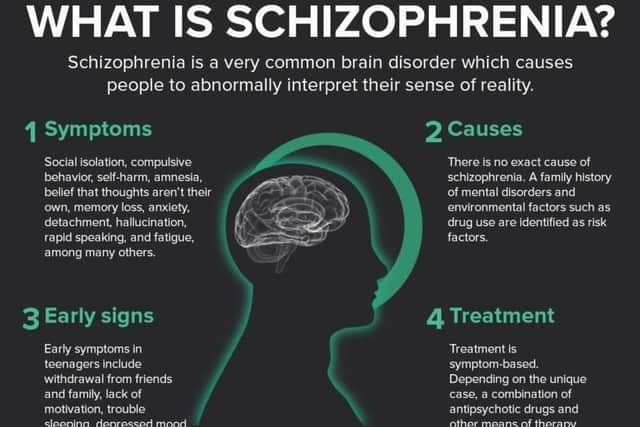
Approx 97% of Schizophrenia patients lack insight – this means that they are unable to recognise or acknowledge that they are unwell, and this results in medication no longer being taken when not being observed by hospital staff.
Can you imagine being told to take a medication, but you don’t believe there is anything wrong with you? Not only are you being told to take a medication that you don’t think you need but this medication comes with awful side effects that require extra medication to counter act! Some of these side effects include weight gain, dizziness, low blood pressure, restlessness, lack of motivation and uncontrollable movements.
My family member had previously been at the top of their game when it came to fitness, they looked after themselves well, wearing designer clothing and kept themselves in shape. They took great enjoyment in running and so the side effects of this medication that caused them to gain weight, to feel so unmotivated and heavy with bizarre leg movements and restlessness meant that they really could not see why they were taking medication when there was no clear positive outcome. This is a common pattern with schizophrenic patients who stop taking medication when they leave hospital and become unwell again, requiring hospitalisation and repeating the process.
Their delusions over time changed. The definition of delusion is “a false belief or judgment about external reality, held despite clear evidence to the contrary” this means that even if you presented evidence that their belief was incorrect in black and white, they would still maintain their fixed belief. Soon the delusions became more complex and the loving bond that we had was broken because they no longer believed we were related and in fact felt that the entire family were in on this big conspiracy to control a narrative about who they really were and who their real family was. They did not want us to be around them, they did not want to stay in contact with us, they became extremely distressed when we tried to check on their welfare accusing us of harassing them and filming us with their phone.
As part of this delusion, they search for the truth daily – walking the streets of the local area. Their paranoia makes them aggressive and accuse people of following them, of watching them, of knowing the truth, of being in on the conspiracy and this can be so terribly frightening to passers-by. They are a danger to others psychologically, affecting the young and vulnerable when they are out alone causing them to fear what they are capable of. However, the Mental Health Act as it stands to protect vulnerable people with mental health issues also fails those who really need help.
Lack of insight means people with Schizophrenia do not know they are unwell and therefore do not seek help. Many of them have delusions about authority figures such as police/health services/ doctors and so will avoid them. When someone becomes unwell, to assess them under the Mental Health Act they must be in a secure environment.
This means that if they are in their own home, they must allow the local GP and Approved Social Worker who are required to make the assessment into their home. If the unwell patient does not wish to let them into their home, the health services have no rights to force entry, but they can apply to a magistrate for a warrant to allow the police to force entry. This comes with its own fixed rules that the person within the home being in immediate danger to themselves or others. If the unwell person is safely in their own home not causing any trouble to anyone – then there is no reason to force entry and therefore an assessment cannot be carried out.
Ah, you say, but you can have the police bring them to a place of safety to be assessed if they are outside. Yes, this is true however the police are required to make a judgement that the person is suffering from a mental illness by the behaviours they are demonstrating and then decide to take them to a place of safety.
As the police are not trained in mental illness, this usually means unless they are demonstrating overtly “strange” behaviour or are posing a threat to others or themselves then they do not take them to a place of safety. For someone like my relative, when confronted in public are aggressive and threatening, they are not overtly strange and not perceived to be a danger to others or themselves as they are not physically violent, so they can slip through the net.
Families like my own are told, “it’s a catch 22 situation” or “we are caught between a rock and a hard place” because of the rules within the Mental Health Act that are there to protect the vulnerable patient. In the past, it was a lot easier to have someone sectioned but this led to an abuse of power and inappropriate detention of people who did not need to be detained in hospital and so rules and guidelines were put in place. The Mental Health Act does not have any consideration for history of mental health issues, nothing to allow for acknowledgement of previous admissions to hospital or for family recognising a deterioration in their health.
The patient themselves despite being actively delusional, are deemed to have capacity under the Mental Capacity Act and so are within their rights to request that their family know nothing about their treatment or detention. They are also allowed to have a tribunal to appeal their detention and if they can prove they are not a danger to themselves, or others will be released from hospital still unwell with no obligation to take medication. This allows for continued deterioration.
Studies show that patients with schizophrenia who have multiple relapses have poorer psychosocial outcomes – they tend to be unemployed, homeless, or in jail and struggle to live independently. Research has also shown that repeated relapses result in worsening of symptoms, becoming more severe and harder to manage. Ability to function and perform daily tasks can decline along with memory, attention and problem-solving skills resulting in permanent disability.
This is not only difficult for the patient and loved ones, but this is a huge financial burden on the healthcare system when they require long periods of inpatient treatment. To avoid relapse, some form of treatment order can be helpful in ensuring the patient continues to take medication even when they feel it is not necessary. In England and Wales, they have such a thing, but Northern Ireland do not have this in place.
My loved one has relapsed so many times, that the original person is pretty much gone and been replaced by this frightened, paranoid, aggressive individual who is so incredibly alone in this world. If they had been properly treated and encouraged or made to stay on medication perhaps this may have all been different. As it is, we must have same fight time and time again to get them assessed, detained, treated and released.
Something needs to change. The Mental Health Act is currently under review with new guidelines on detention for appropriate treatment but it does not take into account any of the information discussed above - previous admissions or recognition of deterioration from others when a patient lacks insight.
There is not enough in the Mental Health Act that provides for vulnerable patients with Schizophrenia and utilised a capacity act that does not consider that the ability to have capacity to make decisions in someone with Schizophrenia will be tainted by their lack of insight into their illness. I do not want to see my loved one commit a crime before someone sits up and takes notice, I just want them to feel well and at peace within in their head because at the moment they are in a living hell.