
Rangers raise concerns over aspects of independent review of cup crowd trouble
Rangers have raised concerns over “significant aspects” of the independent review of crowd trouble at their Scottish Cup defeat by Celtic.
Celtic also dispute some findings of the report, which was commissioned by the Scottish Football Association after the pitch invasion that followed Celtic’s win at Ibrox on March 8.
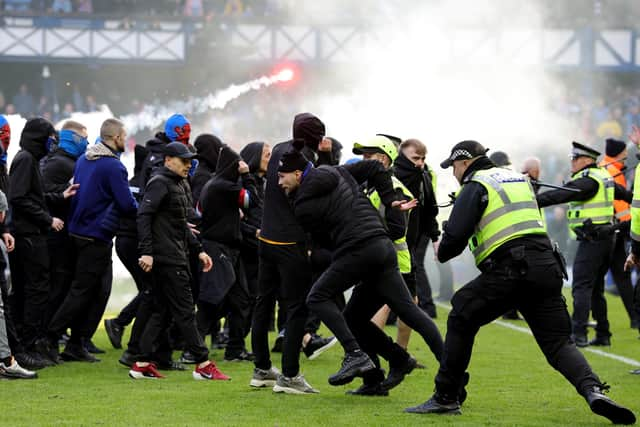

Rangers accepted responsibility “for the areas within the club’s control” and will implement lessons and recommendations after the entry plan for Celtic fans was criticised by report author Mark Blackbourne.
They claimed they had increased safety measures to take account of the increased allocation for Celtic supporters but their plan was “severely tested by those determined to cause disorder”.
A club statement added: “While we support some of the report’s recommendations, we do not accept every finding or factual assertion it contains. We have and will continue to raise concerns with the Scottish FA about significant aspects of the independent report.
“We are concerned about the description and limited examination of the decision to allocate around 8,000 tickets to Celtic, which materially changed the risk profile of the fixture. We raised safety concerns but were left in no doubt that the competition rule would be applied and the increased allocation was expected to proceed.
“The independent review should have scrutinised the Scottish FA’s actions as robustly as those of clubs and other organisations. This is a significant omission.”
Rangers added that they support “stronger national coordination, structured supporter involvement and more effective legislative powers” to tackle supporter misbehaviour.
“As part of that, we welcome the Scottish Government’s recent consultation on strengthening Football Banning Orders,” they said. “The police and the courts must have effective powers to address serious misconduct connected to football.
“We expect tragedy abuse, including abuse concerning the Ibrox Disaster, to be explicitly addressed in any subsequent legislation.”
Celtic chairman Brian Wilson said: “Celtic made its strong objections to important elements of matchday planning very clear, well in advance of the match.
“While we remain in dispute regarding certain points within this review, our club does not shrink from criticisms contained in the report or the lessons to be drawn. Nobody should, since the potential implications of disregarding them are obviously serious, both for safety and for football.
“We continue to believe that the non-violent incursion by a small number of Celtic supporters following the conclusion of the Scottish Cup quarter-final was not, in itself, a major or threatening incident.
“However, the actions by a section of the home support, some of them masked and carrying weapons, and subsequent attacks on our supporters and staff, were deeply concerning and we remain puzzled as to why the actions recommended by the Safety Advisory Group of Glasgow City Council were overturned at a senior level within Police Scotland.
“This has left a vacuum in the role previously understood by consent to be occupied by the Safety Advisory Group. Accordingly, we welcome the recommendation that the status of Safety Advisory Groups should be formalised and strengthened.”
Police Scotland Assistant Chief Constable Alan Waddell said: “The Chief Constable has been clear there is a lot of work to be done by stakeholders across Scotland, and we will continue to engage with the clubs and football authorities on the recommendations contained in the report.”