
The Digital Clutter Problem: Why Belfast Workers Could Be Losing Time to Disorganised Files
Belfast has become a major centre for business, employment and innovation, with the Belfast City Region contributing more than £28.9 billion to Northern Ireland's economic output and accounting for around 40% of the region's business base, according to Belfast City Council's Corporate Plan 2025-2028.
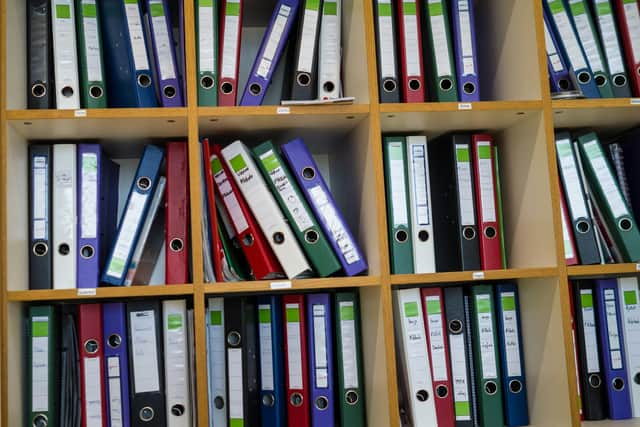

As more businesses move their documents, records and everyday workflows online, workers are increasingly surrounded by digital information. But while digital files can make work faster and easier to share, a growing collection of documents can also create a new workplace problem: digital clutter.
For Belfast workers, the problem may be less about how much information they have and more about how easily they can find the right information when they need it.
The issue reflects a wider shift towards digital working across the UK. The latest UK Government Business Data Survey found that 86% of UK businesses handle digitised data, with the figure rising to 99% among small businesses and 92% among micro businesses.
Northern Ireland businesses are part of this increasingly digital environment too. The latest Northern Ireland Business: Activity, Size, Location and Ownership 2026 report from the Northern Ireland Statistics and Research Agency provides the latest picture of the region's business population.
While the UK data highlights how widespread digital information has become, research from Smallpdf in the US suggests that having more digital documents can come with an unexpected productivity cost.
Smallpdf surveyed 1,000 full-time US professionals in March 2026 and found that workers spend an average of 2.3 hours every week searching for files they cannot quickly locate. Smallpdf estimates that this could represent around $4,160 per employee each year in lost productivity.
The figures cannot be directly applied to Belfast or Northern Ireland because the Smallpdf survey was conducted among US workers. However, the underlying problem is relevant to any workplace dealing with large volumes of digital information.
When documents are spread across desktops, downloads folders, shared drives and cloud storage, even a simple task can turn into a search exercise. A worker may remember creating a document but not where it was saved, which version is current or whether someone else has already made the changes they need.
The digital clutter habits costing workers time
Smallpdf's research highlights several behaviours that can contribute to digital clutter and make documents harder to manage:
37% of workers have copied a file and forgotten to rename it.
51% have wasted time redoing work because they could not find the original file.
35% have sent the wrong version of a file to a colleague, client or stakeholder because of confusing filenames.
45% have performed duplicate work because they could not find an existing file.
One in three workers said their workplace does not have a consistent file-naming system.
55% said their team lacks a shared or standardised naming convention.
36% said file disorganisation had negatively affected team productivity.
The problem can become particularly noticeable when digital folders contain dozens of similar documents.
Files labelled "final", "final2", "new", "updated" or "copy" may seem harmless individually, but collectively they can make it difficult to establish which document is actually the most recent or relevant.
Smallpdf found that 49% of professionals identified "copy" or "copy of" as a filename red flag. Long strings of numbers with no context were identified by 37%, while 35% pointed to vague descriptions.
These habits can turn digital storage into the equivalent of an overfilled filing cabinet: everything is technically there, but finding the right item takes time.
How Belfast workers can tackle digital clutter
Reducing digital clutter does not necessarily require new software or a major overhaul of a company's systems. Small changes to the way documents are stored and managed can make information easier to retrieve.
Start with the Downloads folder
The Downloads folder can quickly become a dumping ground for documents, PDFs and attachments. Moving important files into clearly labelled folders and deleting unnecessary copies can make frequently used documents easier to locate.
Create a simple folder structure
Instead of keeping hundreds of documents in one location, businesses can organise files around clear categories such as client, project, department or year.
Use consistent filenames
A simple naming convention can make files easier to identify without opening them. Including the project name, document type and date can provide useful context at a glance.
Make version control obvious
Using clear version numbers such as "v1", "v2" and "v3" can reduce confusion when multiple people are working on the same document.
Delete unnecessary duplicates
Duplicate files take up storage space and can make searches more difficult. Removing outdated copies can help teams distinguish the documents that actually matter.
Avoid storing everything forever
Not every document needs to remain on a desktop or in an active project folder indefinitely. Businesses can establish simple rules for archiving or removing files that are no longer needed.
A small digital tidy-up could make a difference
For Belfast's businesses and workers, digital information is now an unavoidable part of everyday working life. As the volume of documents continues to grow, simply having a digital system is not necessarily enough.
The Smallpdf research suggests that disorganised digital files can have a measurable impact on how much time workers spend searching, recreating and checking documents.
Although the research was conducted among US professionals, the underlying challenge is familiar across modern workplaces: the more digital information people accumulate, the more important it becomes to keep that information organised.
For Belfast workers, tackling digital clutter could be as simple as spending a few minutes clearing old downloads, removing duplicate documents and establishing a consistent way to store and name files.
In a workplace where hundreds of small tasks are repeated every week, making documents easier to find could help turn some of that otherwise wasted time back into productive working time.