
Roamer: Belfast professor names newly found fish after film star son
Following on from Carrickfergus’s plucky little First World War Q-Ships that featured here for the past few weeks, today’s page continues on a maritime theme.
Few of us will forget regular-contributor Hugh McGrattan’s account last year of 30,000 wet parachutes, urgently needed for the D-Day landings, being dried on a north coast clothes line! In a moment Hugh will be sharing another north coast wartime tale, about a present for Portrush that local folk most certainly didn’t appreciate when it arrived in the town 110 years ago.
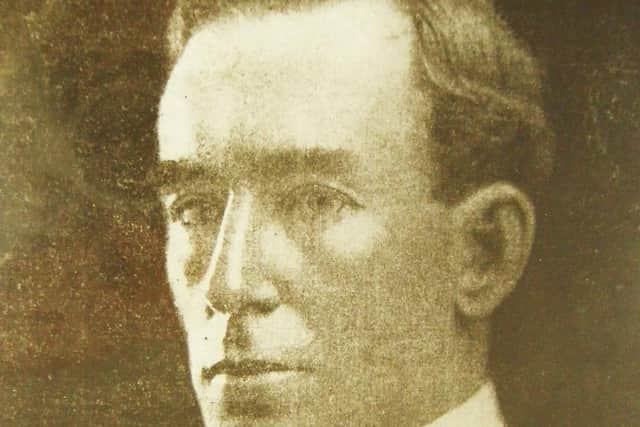

But first, although swashbuckler Hollywood film star Errol Flynn was born in Tasmania - where his father was a renowned University Biologist before moving to Belfast - Errol often referred to himself as Irish as his grandfather, John Flynn, had emigrated from Ireland.
The stories passed around about Errol’s visits to Belfast are many, often exaggerated, and mostly mythical.
His father, Theodore Flynn MBE, was Professor of Biology at Queen's University from 1931 to 1948.
The Professor travelled the world searching for new species of sea creatures and when he discovered a sub-tropical Spotted Kelpfish in the Pacific he named it Gibbonsia elegans erroli after his son.
Errol’s Kelpfish has been mentioned here before, but at last there’s a rather endearing picture which has been languishing in Roamer’s mailbox for several years.
Today’s other maritime tale - from author, journalist, local historian and former editor of the Coleraine Chronicle Hugh McGrattan - has been in the mailbox since the New Year. Hugh headlined his story ‘A New Year Gift the People of Portrush did not want!’ and the rest of the page is Hugh’s.
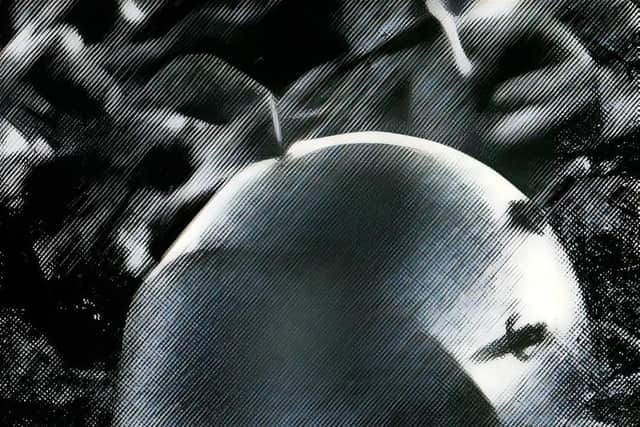
At the start of 1915, with WWI less than six months old, Portrush received a New Year present that it didn’t want - an unexploded sea mine which had lodged in rocks on the peninsula’s western shore. The drifting mine was spotted coming in at Dhu Varren on Monday 18 January. It was the first such weapon to come ashore anywhere in Ireland - a grim privilege for the north coast resort.
Naval demolition experts were quickly on the scene but were unsure of the exact type of weapon they were dealing with.
Night was approaching, so they decided to leave the mine alone until daylight.
In the meantime, residents with houses overlooking the rocky foreshore where the weapon lay were advised to leave their windows open in order to reduce the damage should the mine explode overnight.
Many Dhu Varren folk took the added precaution of moving to temporary accommodation on the other side of the town.
The mine did not explode and was eventually made safe.
The empty casing was then put on display for a few days on the Town Hall green before being taken away for further examination.
Today, there is still a disarmed mine on display in the Portrush town centre, but it’s from another conflict and serves as a giant collection box for a maritime charity.
Incidentally, the 1915 mine is believed to have come from a minefield laid by the Germans off the Donegal coast, where the brand new battleship HMS Audacious struck a mine and sank the previous October. This was a humiliating loss which the Admiralty attempted to keep secret until after the war.
Another incident involving a mine, but with more audible consequences than the New Year gift, took place a few months later.
One of the first motor fishing-boats operating out of Portrush encountered the drifting mine while returning with a channel pilot from a steamer. The crew coolly tied a rope around the mine and towed it to a safe anchorage in the West Bay at Portrush.
Next day, the sergeant of police received orders to explode the mine by rifle fire.
He hit the bull’s eye with his second shot from the south pier of the harbour and the bull roared mightily!
The column of water was twice the height of the 80-foot ‘stone bins’ (crushed-stone silos) that then dominated the north pier. A number of houses on the seafront suffered broken windows.
On the plus side, three boatloads of stunned and dead fish were collected by local fishermen who were said to have been knee-deep in fish by the time they got back to shore.
The unexpected catch was no doubt eagerly received by a Portrush population feeling the effects of war-rationed food supplies.