
Louise’s cancer journey shows how prehab can transform recovery
More than 1,000 patients have now been referred to the South Eastern Trust’s Cancer Prehabilitation Programme since it was launched in March 2021, helping people prepare physically and emotionally for cancer treatment while supporting their recovery.
For Bangor woman, Louise Dixon, the programme has played an important role in helping her feel stronger, more prepared and more confident throughout her cancer journey. Louise was diagnosed with bowel cancer in January 2025 and began chemotherapy the following month.
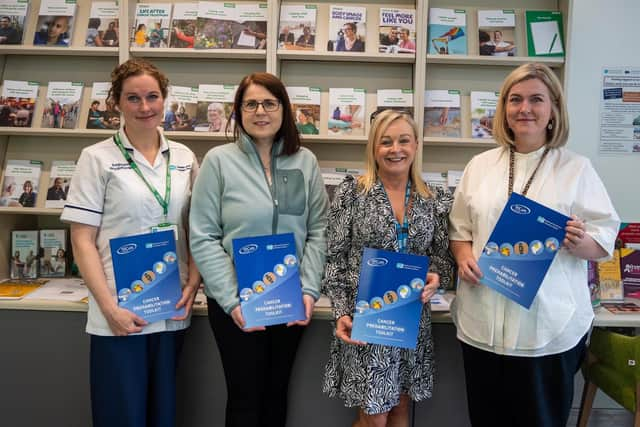

As she progressed through her treatment, she was supported by the Trust’s Dietetic Team to ensure she was getting the nutrition she needed. The Cancer Prehabilitation Programme, is an exercise, nutrition and emotional wellbeing programme co-designed with people living with cancer and delivered by a team of health professionals and exercise specialists.
It also supports people to make positive lifestyle changes such as stopping smoking and reducing alcohol intake which can help improve outcomes and quality of life. Louise said: “It was really important to make sure I was getting the right nutrients, throughout the process of receiving chemotherapy and doing everything I could to keep myself as well as possible.” Louise’s treatment journey was complex. In June 2025 she required emergency surgery following a bowel blockage which resulted in her having a stoma.

She then underwent further radiotherapy treatment in July. Louise explained: “I was really focused on the nutritional side and how the radiation had affected my digestive system. I wanted to make sure my body was getting enough of what it needed nutritionally to deal with the treatment. “My prehab process started in September when I met with the physiotherapy team who gave me exercises to do.
"I had to build my strength and stamina ahead of surgery as I knew it was going to have an impact on my body. I knew I had to be as fit as I could.” Under the guidance of the physiotherapist, Louise was given a personalised programme of exercises to improve her fitness and muscle strength, including time on an exercise bike, core muscle work and stretches. “I had abdominal surgery and now have two stomas, so core strength is really key for me”, Louise said. “I recovered a lot quicker than I was supposed to. I am now back at work and the prehab programme really helped build my strength and confidence back up. “I listened to my body and I did what I could, when I could.
"Your body can take quite a battering going through chemotherapy and radiotherapy. It really does help when you are building up your strength and nutrition before and after surgery. “The physiotherapy team tailored the exercises for me. This was a really good service and the staff have been brilliant.
"They are so helpful and always at the end of the phone if you need them.” Macmillan prehabilitation clinical project manager, Paula Kealey, said: “A diagnosis of cancer can be devastating.
"The Cancer Prehabilitation Programme is here to help you take back some control and play an active part in your own care.
"Small steps early can make a really big difference. It may improve your recovery and shorten your stay in hospital.
"In some cases, exercise has even been shown to reduce the likelihood of cancer coming back. “It is really important that prehabilitation is introduced as early as possible, right from diagnosis, so that we give you the best chance of getting as fit as possible before your surgery or treatment.”