
Derelict Victorian church on Shankill to become artists' studios: Historic Nelson Memorial Presbyterian went on 'at risk' register after closing in 2014
One of the Shankill’s best-loved historic churches is to become studios for artists in a bid to restore it to life.
Built in the late Victorian era, Nelson Memorial Presbyterian Church shut its doors in 2014. Despite being listed for protection, five years after it closed it was added to an official list of at-risk buildings, and in 2023 it went on the market priced at £195,000.
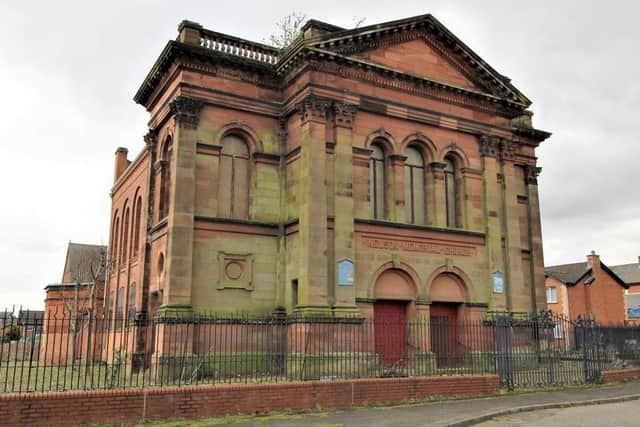

Now a creative enterprise aims to turn it into “a hub for innovation, collaboration, and learning”, offering studio space for artists, crafters and electronics engineers from hobbyists to professionals.
Called Belfast Makerspace, it’s owned by husband and wife team Sam and Kat Nelson. In reworking Nelson Memorial, they state: “Our mission is to foster a vibrant community of makers, artists, and inventors.”
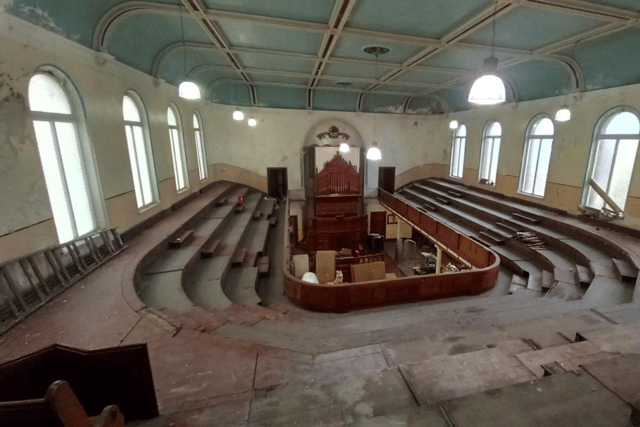
A planning application to transform the church is currently making its way through the city council, though videos posted on the organisation’s YouTube channel shows they’ve already been carrying out renovation work to the interior of Nelson Memorial, including repairing its roof and ceilings from damage incurred over more than a decade lying derelict.
According to documents filed with that planning application, the church has had no regular congregation or permanent minister since 1990, and no services since May 2014.
Stating they want to respect the craft and history of the building, the creative enterprise plans to only make “minimal physical alterations” to Nelson Memorial.
Belfast Makerspace’s aim is to see the main hall of the church transformed into seven studios available to rent by artists, designers and entrepreneurs. Its rear hall will become a workshop with saws, drills, lathes and sanders, available for crafting and DIY projects including woodwork, jewellery making and leatherwork, while an upstairs area that used to house extra pews will be turned into a gallery.
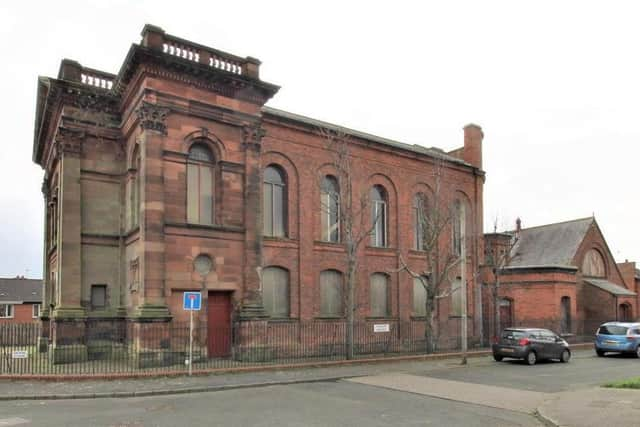
The project, state planning documents, will not only recover a listed building, but also “promote repair, reuse and up-cycling” and boost social interactions, resulting in “a positive impact on the survival on this heritage asset, as well as on the environment, the local community and economy”.
The Annsboro Street church has stood in the Shankill area since the 1890s. It was constructed after Elizabeth Nelson, devoted sister of clergyman and MP Rev Isaac Nelson, left thousands of pounds to trustees for a church to be built in his memory.
A grade B1 listed building, it has been described by Ulster Architectural Heritage as a “classically styled red sandstone Presbyterian church with grand entrance facade”, which is of “architectural interest with regard to its unusual plan form”.
Added the organisation: “This is a late example of Presbyterian classicism, departing from the Gothic styles that had been favoured since the earlier part of the 19th century.
“Nelson Memorial is a church of much aesthetic, historic and architectural interest, constructed in honour of the prominent religious and political figure Rev Isaac Nelson and to designs by a local architect of note.”
That architect was William John Gilliland, a prominent figure in Victorian Belfast. He mainly focused on commercial and industrial projects rather than ecclesiastical buildings, designing well-known properties including the Ormeau Bakery, Gresham Chambers on Royal Avenue, and the North Belfast Working Men’s Club on Danube Street.