
Roamer: Rare spotlight on remarkable Lord Mayor from times past
Around 20 years ago a little Belfast-built sailing ship called the Mullogh first featured on Roamer’s page.
Launched on the Lagan in 1855 by the rarely recounted Coates and Young shipbuilder, the 46-ton, two-masted Mullogh was 60 feet long with an auxiliary steam engine powering a single propellor.

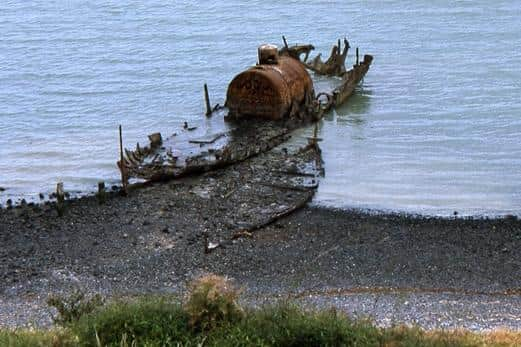
With a crew of five she sailed to Australia and undertook numerous historic voyages back and forth to New Zealand until 1923 when she was beached in a lonely New Zealand bay.
And she’s still there today, confirmed with photographs on this page last May, when local historian Richard Graham from Lisburn offered more information about the remarkably entrepreneurial Coates family.
Richard specialises in Ulster ‘society families’ and writes about them extensively for History Hub Ulster.
He explained that Israel Coates came to Ireland from Scotland and settled in Belfast in the early 18th century.
Israel’s son Victor started a pottery business beside the Lagan around 1791 and by 1798, in partnership with muslin manufacturer John Young, established one of Belfast’s first foundries, Coates and Young, at the Lagan Foundry.
Victor’s second son William expanded the business, adding the Prince’s Dock Works and making steam engines for Ireland’s burgeoning linen industry.
Notably, the company manufactured the engine for Ireland’s first (wooden) steamship in 1820 and built and launched Ireland’s first iron steamship in 1838.
Two of William’s sons - Victor and David - joined him in the business, trading as Victor & David Coates Ltd.
They amassed considerable wealth.
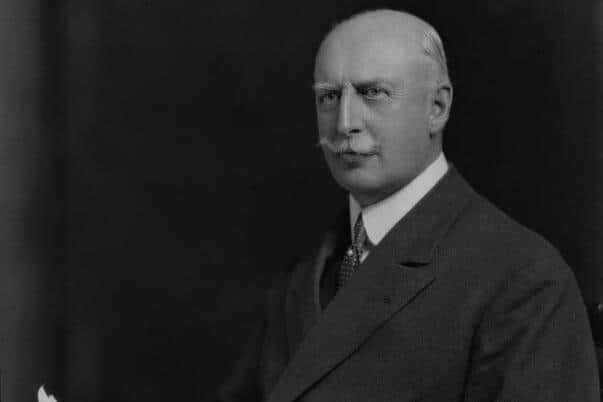
Richard Graham is keen to focus on David’s eldest son, Sir William Frederick Coates.
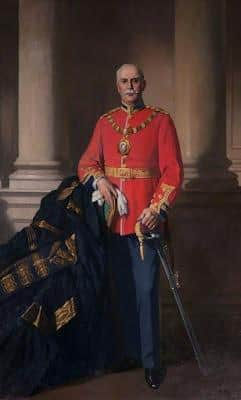
“Like many of our Victorian leaders,” Richard emphasises “Sir William’s achievements have probably faded into time, but he is only one example of ‘the boy made good’ that can be found in Belfast’s rich history.”
Born in 1866, educated in Belfast’s RBAI and St Mark’s School, Windsor, William Frederick joined the Richardson Brothers linen company in Belfast.
His father David helped set him up as a partner in the stock broking firm of R C Grubb & Coates in Lombard Street.
David died in 1895 and with his inheritance William branched out on his own as W F Coates & Co, later joined by younger brother (by eight years) Harold.
William was Churchwarden at St Marks, Dundella, where Harold was Honorary Secretary of the Vestry.
In 1907 William married Elsie Millicent Gregory and moved to the shores of County Antrim at Carrickfergus, where he leased the extensive estate of Glynn Park.
Around 1902 William became a member of the Belfast corporation, a councillor for the Ormeau Ward, and then Belfast’s High Sheriff in 1906.
William and Elsie had a son, Frederick Gregory Lindsay, and a daughter, Jean Ann Dorothy.
When he became a partner of stockbroker Ainsworth Barr, William had more time to devote to his political career and civic duties.
He excelled in Belfast Corporation’s Finance Department - so much so that he became Chairman in 1917.
He served as the city’s Lord Mayor for three consecutive terms from 1920-1923 and hosted King George V and Queen Mary on their state visit to open the Northern Ireland Parliament on 22 June 1921.
Both Coates children, along with N.I Prime Minister James Craig’s daughter, presented a bouquet to the Queen.
A month later William was created 1st Baronet Coates, of Haypark, an area close to the first Coates Foundry and the family’s Glentoran House.
As Lord Mayor, Sir William had an ex-officio seat in the Northern Ireland Senate and held the position of First Senator in 1921.
He was also Deputy Speaker from 1921-1922, sat in the House as an elected representative between 1924 and 1929 and again as an ex-officio from 1929 to 1931.
He held Ulster Club and Union Club membership in Belfast and as one of Northern Ireland’s first private owners of a motor car he was in the London-based Royal Automobile Club.
In 1928, aged 62, Coates was again elected Lord Mayor of Belfast - for two more terms - and the following year he became High Sheriff for County Antrim - a position he held until his death.
He died in Carrickfergus on 19 January 1932 aged 65 and his funeral took place on Saturday 23 January 1932, bringing Belfast City centre to a standstill.
Elsie, Lady Coates, remained in Carrickfergus but moved to Newcastle, County Down, shortly before she died on 26 June 1958.