
How a young Co Londonderry soldier’s skills for milking cows and shooting rabbits came in useful during World War II
On May 8, 1945, as crowds across Europe and beyond celebrated VE Day, one man from Desertmartin, Co Londonderry, was far from the jubilant street parties, writes Helen McGurk.
Instead, Andrew Charles lay in a hospital bed, recovering from life-changing injuries sustained during the brutal fighting that brought about that very victory. His absence from the celebrations was emblematic of so many others who had given so much in the fight against fascism.
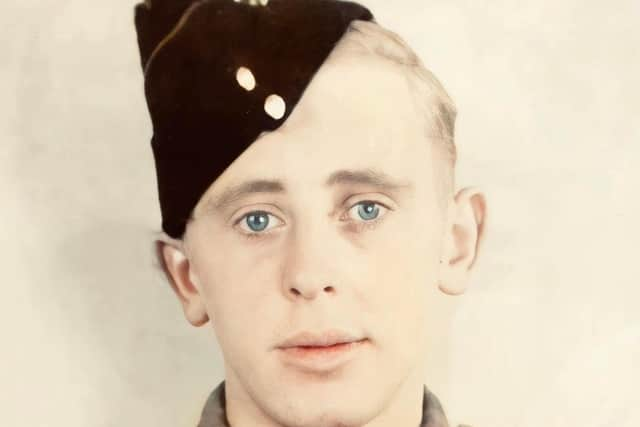

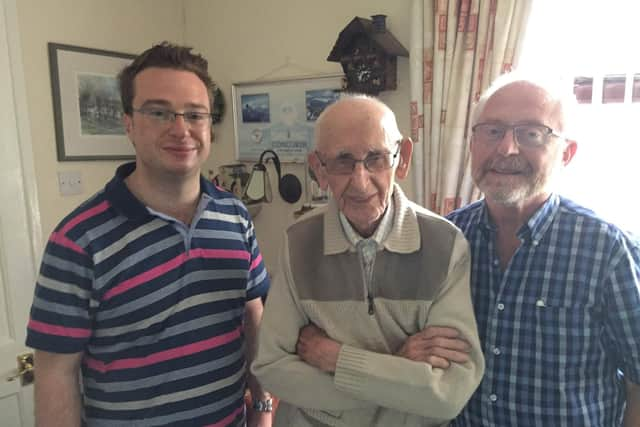
Andy, as he was known, served with the Royal Ulster Rifles, and his bravery in the Second World War came at tremendous personal cost. Today, his memory is being kept alive by his great-nephew, Dr Andrew Charles from Belfast, who shares not only his name but also his deep respect for Andy’s quiet heroism.
“He looked up to his brother Allen and followed him into the war,” Dr Charles explains.
Andy joined the Home Guard at just 15 while still at school. Later, aged 17, he enlisted in the Royal Inniskilling Fusiliers, bringing with him exceptional marksmanship honed shooting rabbits and foxes on the hills around Desertmartin with his father and grandfather.
After being discovered to be underage, Andy, who was in England at the time, had to be reassigned alongside Thomas ‘Tot’ Barker, from Cookstown, another young soldier who would go on to join the SAS before being killed behind enemy lines in 1944.
Andy himself was selected for the 2nd Battalion, Royal Ulster Rifles, where he became a Bren gunner, his sharp shooting skills making him a key asset.
He landed on Sword Beach on D-Day, June 6, 1944, at 10 am and took part in fierce combat at Cambes Wood, helping liberate Caen in August. For his actions near Troarn in July, he was awarded the Military Medal — a testament to his courage.
But war would catch up to him in December 1944 near the River Meuse at Wanssum, Netherlands, where a German machine-gunner struck him in the leg. Evacuated to Brussels and then flown to England, Andy’s life was saved by a German surgeon — a man he later praised for doing “a good job” despite being an enemy.
Andy spent two years recovering in Campbell College, Belfast, which had been converted into a military hospital. Though he never fully recovered — always walking with a stick — his injury never dimmed his determination or spirit.
After the war, Andy settled in Magherafelt, marrying Cora and raising three children. Tragically, two of his sons, Russell and Lesley, died at age 15 from muscular dystrophy. Despite these losses, Andy remained active and driven. He worked as a carpenter for the Electricity Board and created a personal war museum in his home, sharing his experiences with visiting schoolchildren.
“He didn’t really like talking about himself,” said Dr Charles. “But he wanted young people to understand what the war was like, and what it meant.”
Andy remained largely silent about his war experiences until the 1990s.
“I think a lot of veterans basically just say they were the lucky ones. And I think from what he saw it just had such an impact on him – that's basically why he didn't say anything about his involvement."
Dr Charles has recordings of him speaking on Radio Ulster, as well as a memoir he later wrote. That silence, the family believes, stemmed from a deep respect for those who didn’t make it home — especially his brother Allen, who was killed by friendly fire shortly after landing in Normandy.
“Andy only visited Allen’s grave once, in Ranville War Cemetery,” said Dr Charles, “but every year he placed a memorial in the News Letter. He never forgot.”
One of the most human stories Andy shared was of a cow that wandered near their trench. Being the only one who knew how to milk it, he provided fresh milk to his comrades daily — until the cow was tragically killed in an offensive.
“Also with the boats that brought them onto the beach, they were American and flat bottom. And he said, ‘we could have been killed’, not thinking about all the other things in the war that goes on.”
He also recalled protecting a German POW from a vengeful French crowd, firing into the air to disperse them. “He said he was frightened,” Dr Charles remembers. “He didn’t pretend otherwise.”
“Also, prior to getting shot, he had a bad feeling in his stomach that this wasn't going to go well.
“I've been out to the place he was shot. There was a German machine gunner who was 16 at the time and he was firing low, so that's obviously where Andy got hit in the leg.”
Andy was later awarded the Legion d'Honneur — France’s highest national honour — for his role in liberating the country from Nazi occupation.
Dr Charles said: “Andy’s bravery, especially at such a young age, and the freedoms he helped secure for us, for democracy, and in the defence of democracy and freedom against tyranny. I'm very proud of the fact that both he and Allen served and contributed to the war effort. These stories need to be passed on to the next generation.”
lJackie McGregor’s column returns next Saturday.