
Nationalists may have hated it but 1801's Act of Union was good for Ireland in many ways
Count Cavour is, understandably, best remembered as the principal architect of Italian unification and first prime minister of a united Italy rather than as a commentator on Irish politics in the early 1840s.
Nicholas Mansergh drew attention to this unfamiliar aspect of Cavour's life in ‘The Irish Question, 1840-1921’ (1975). At a time when most Europeans would have been sympathetic towards Daniel O'Connell's campaign for the Repeal of the Union, Cavour was an enthusiast for the Union because it was in the best interests of Ireland, England and 'material and intellectual civilisation'.
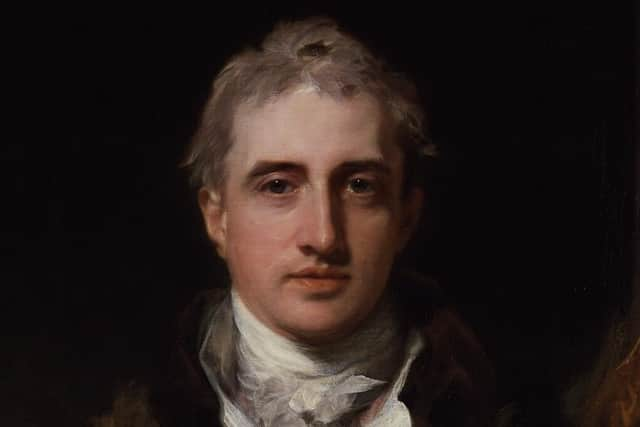

Cavour regarded the Act of Union, which came into effect 225 years ago on January 1 1801, as an 'irreproachably just' economic and political settlement of Anglo-Irish relations.
Nevertheless, for more than two centuries, many Irish nationalists have become dewy-eyed at the mere mention of the 18th century Irish Parliament. They seem to lose sight of the fact that it was exclusively Protestant in composition, not conspicuously liberal in sentiment and, in 1799-1800, demonstrated itself to be venal and corrupt.
They seem to forget that the principal aim of the Society of United Irishmen was the reform of that parliament, a point illustrated by the United Irish test.
Failure to secure reform drove the United Irishmen into armed rebellion. The Act of Union – which abolished the quasi-independent medieval Irish Parliament – was the most important consequence of that rebellion.
As the United Irishmen had originally sought the reform of this parliament, many United Irishmen were not unhappy at its abolition, especially as it held out the prospect of reform, ‘Catholic emancipation’ and the liberalisation of trade.
By depriving so many boroughs of their parliamentary representation, the Act of Union was, in effect, a significant measure of parliamentary reform. Trade was liberalised. The only failing was that ‘Catholic emancipation’ was delayed for a generation.
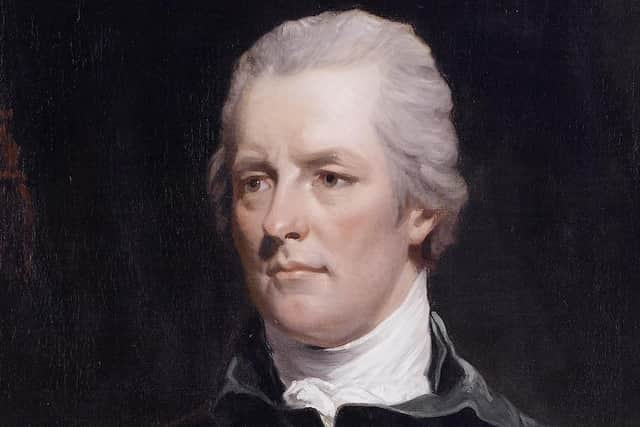
In many respects not a great deal separated the aspirations of the United Irishmen on one hand and those of Pitt and Castlereagh, the principal architects of the Union, on the other. Therefore, one should not be unduly surprised by the fact that Samuel Neilson and Archibald Hamilton Rowan warmly welcomed the union. They were not alone.
Nationalists have a jaundiced view of the Union. They almost invariably regard the Union as the cause of economic decline. In the past economic historians were prepared to endorse this view but more recent scholarship assesses the impact of the Union to have been either neutral or even positive.
For example, Cormac O'Grada, Ireland's leading economic historian, in ‘Ireland: A New Economic History, 1780-1939’ (1994) has written: ‘Contrary to traditional Irish nationalist claims, the economic impact of the Act of Union in the short term was minor. Manufacturing output and trade continued to grow. Nor were fears of deindustrialisation to the fore in the debate about the Union. In the event, even the removal of the Dublin Lords and Commons had little evident effect on the Dublin economy, partly because any resulting rise in gentry absenteeism was made good for decades by an increasing military presence.
‘The rise in the city's population from 180,000 in the late 1700s to 231,600 in 1821 was faster than during the 1780s and 1790s, usually deemed decades of prosperity and progress. In the countryside, the high prices generated by the war were a boon also to farmers and landlords. But the period was one in which lots of things were happening at once – Industrial Revolution, war, political change – making the analysis of any single factor's role almost impossible.’
The specific economic impact on Belfast requires special mention because Belfast and its environs benefited enormously from the Union. As A T Q Stewart has observed: 'In 1792 Belfast could have been described as a market town with harbour facilities, but by 1825 it had already assumed its modern status as an industrial port'.
In 1842 Henry Cooke repudiated Daniel O'Connell's case for Repeal of the Union by recourse to Belfast's experience under the Union. When the Union came under threat from the mid 1880s onwards, Belfast Chamber of Commerce played an important role in combating the Home Rule threat. The chamber stressed that Ulster's wealth and prosperity was due to the 'security and protection' afforded by Parliament since the Act of Union and the 'frugality and enterprise' of its people.
Most nationalists attribute failure of the Union to deliver immediate ‘Catholic emancipation’ to bad faith on the part of Pitt and Castlereagh, the chief secretary. This is manifestly unjust.
Pitt genuinely wished to bring Irish Roman Catholics within the body politic. He believed, correctly, that the exclusion of Roman Catholics from the Irish polity made Ireland inherently unstable.
Castlereagh viewed the Union as the prelude to ‘Catholic emancipation’. He also believed in the abolition of tithes and the state payment of Roman Catholic clergy. It was his conviction that this package of measures would bind the Roman Catholic population to the Union.
Opposition, principally from the Earl of Clare, the Irish lord chancellor, ensured that ‘Catholic emancipation’ did not actually accompany the Union. King George III thwarted its introduction shortly after the Union came into operation.
Pitt raised the issue of ‘Catholic emancipation’ with the King on January 31 1801, nine days after the first meeting of the United Parliament. When George III refused to countenance it, Pitt announced his intention to resign on February 3. As a result, the King lost his ablest minister, along with Cornwallis, the lord lieutenant, and Castlereagh.
The economic historians Liam Kennedy and David S Johnson have argued that ‘on balance, the Union was a benign rather than a malign framework for the evolution of the Irish economy, and perhaps of Irish society more generally'.
This is not a view nationalists would readily accept but the reality is that the Union incorporated a society of retarded development into the most advanced country in the world. The Union transformed Irish society through the adaptation of British administrative solutions to Irish conditions and far-reaching state intervention in a wide range of areas, notably public health, education, the land question and economic development.