
William McComb, poet and bookseller who published ‘a foundational text of unionism’
William McComb was born on August 17 1793 in Coleraine and was the son of Thomas McComb, a linen manufacturer and draper, and his wife (née Foster).
Thomas soon afterwards moved his family and his enterprise to Londonderry and developed business contacts with Belfast.
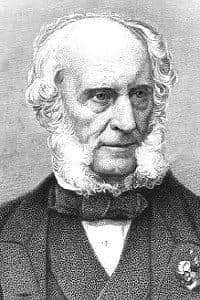

During William’s apprenticeship to Thomas O’Neill, a Belfast wholesale draper with premises in Donegall Street, he and Sinclare Ramsay, a fellow apprentice, founded a Sunday school in Belfast to counter Tom Paine’s radical political and religious ideas.
Christianity being central to William’s worldview, he was seriously alarmed at the impact of Paine’s ‘The Age of Reason’ – published in three parts in 1794, 1795, and 1807 – which, in the words of the Marxist historian E P Thompson, ‘ridiculed the authority of the Bible with arguments which the collier or country girl could understand’.
In 1818 Richard Carlile was prosecuted for seditious and blasphemous libel for publishing a complete edition of Paine’s work, including ‘The Age of Reason’. The trial, which generated a media frenzy, may well have been the catalyst for McComb’s decision to set up a Sunday school.
Having acquired a taste for teaching, McComb then trained as a schoolmaster with the Society for the Promotion of the Education of the Poor in Ireland – better known as the Kildare Place Society.
It was established in 1811 by a group of prominent philanthropic businessmen and lawyers including Samuel Bewley, the silk merchant and founder of Bewley’s cafes; J D La Touche, the banker; William L Guinness, the brewer; and Joseph Devonsher Jackson, lawyer and future politician and judge.
Apart from Bewley who was a Quaker, these figures could be regarded as Anglican evangelicals.
Although formally non-denominational, its constitution stated that the Bible would be read in schools ‘without note or comment’, a position wholly unacceptable to the Roman Catholic Church.
McComb managed and taught at the society's Brown Square school in the Shankill until 1828. This brought him into contact with the 3rd Earl of Roden, the Conservative peer and Orange leader, and Henry Cooke, the Presbyterian minister whose orthodoxy and conservative politics he shared. Cooke served on the Brown Square school’s fundraising committee.
In 1828 he became a bookseller and publisher with the aim of ‘giving increased circulation to a sound religious literature’.
Books by Cooke and his associates featured prominently on his publication list. In 1829 he began publication of the monthly ‘Orthodox Presbyterian’ (co-edited by Cooke), which advocated Trinitarian orthodoxy against the Arianism of many Non-Subscribers.
Beginning in 1840, he published ‘McComb's Presbyterian Almanack’, a compendium of lists of Presbyterian ministers, congregational histories, and accounts of the progress of Presbyterianism in Ireland, Scotland, America and Europe as well as verses written by himself.
The Almanack appeared annually until at least 1889, thus outliving McComb by 16 years.
The most significant publication for which McComb was responsible was ‘The Repealer Repulsed’, a piece of instant political history which has been regarded as ‘a foundational text of Ulster unionism’.
In January 1841 Daniel O’Connell visited Belfast to speak in support of the repeal of the Act of Union. Henry Cooke invited O’Connell to debate the subject. O’Connell declined to enhance Cooke’s reputation.
The nationalist Vindicator newspaper thought it ridiculous that a great man like O’Connell be expected to bandy words with ‘a provincial bigot’. Cooke regarded O’Connell as ‘a great bad man with a great bad cause’. Unionists hailed Cooke as a hero and ‘the cook who dish'd Dan’.
In one of the earliest statements of the economic case for Ulster unionism, Cooke famously repudiated Daniel O’Connell’s case for repeal by highlighting how Belfast had grown and prospered under the Union: ‘Look on Belfast, and be a repealer if you can’.
Admittedly, as early as April 1834 Emerson Tennent, one of Belfast’s two MPs, had repudiated Daniel O’Connell’s case for repeal in the House of Commons by highlighting the economic success of Belfast under the Union. The population of Belfast had increased from 20,000 to 53,000 during the first three decades of the 19th century. Furthermore, ‘the north of Ireland had, every five years, found its trade doubled since the Union’.
‘The Repealer Repulsed’ included reports of speeches made at a meeting of Cooke's supporters, various pieces satirising O'Connell, and cartoons drawn by McComb but inspired by those of the Dublin-born but London-based cartoonist and lithographer John Doyle.
In retrospect, O’Connell regarded his visit to Belfast as a failure and a mistake because it only served to highlight the weakness of the repeal cause in Belfast. (It was also humiliating because O’Connell felt obliged to travel to Belfast under the name of a Dublin ventriloquist.)
Unsurprisingly, as Dr Partick Maume points out in his invaluable introduction to his edition of ‘The Repealer Repulsed’, this episode figures more prominently in biographies of Cooke than those of O’Connell.
McComb’s social concerns were wide ranging. He was active in many charitable organisations, notably as co-founder and first treasurer of the Ulster Institute for the Education of the Deaf and Dumb and the Blind.
A poet, from his early 20s he contributed verse to local newspapers.
Although he wrote in standard English, he was proud of his friendship with Robert Burns's granddaughter and David Herbison, ‘the Bard of Dunclug’.
‘Two Hundred Years Ago’, perhaps his best-known poem, was written in celebration of the bicentenary of the first Irish Presbytery in Carrickfergus in 1842.
Another poem about the death of Betsy Gray after the Battle of Ballynahinch was also much admired throughout the 19th century.
When J L Porter, Cooke’s son-in-law, embarked on his ‘Life and Times of Henry Cooke’, he was assisted with material by McComb.
McComb died at the age of 80 at his home on the Lisburn Road in Belfast on September 13 1873. Up to a few weeks before his death, he was still teaching blind children at Fisherwick Place school.
He is buried in Hillsborough, significantly the venue where Henry Cooke published ‘the banns of matrimony’ between Anglicanism and Presbyterianism in 1834, an event which has been regarded as the birth of Ulster unionism.