
Al Carns: Ex-armed forces minister who quit over Troubles plans wants to hear more from Andy Burnham before deciding to vie for PM
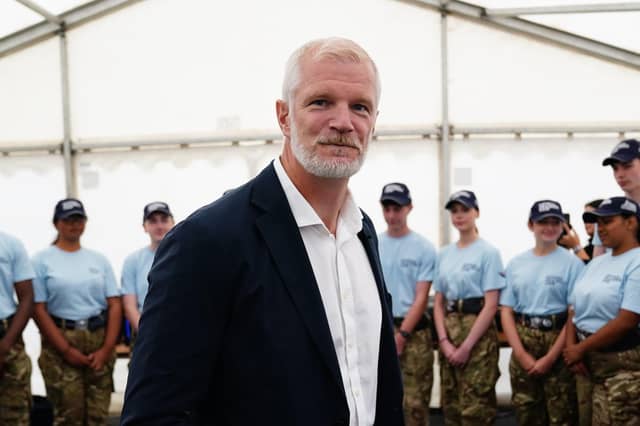

The former minister who quit over Labour’s Troubles legacy plans wants to hear an upcoming speech from Andy Burnham before deciding whether or not to vie with him for the role of Prime Minister.
If ex-armed forces minister Al Carns, a former Royal Marine, were to succeed Keir Starmer as Labour leader it could mean a dramatic change in direction in government policy on Troubles legacy cases.
He says a major economics speech due to be given by Mr Burnham today will help him decide whether to challenge the Labour leadership favourite.
Mr Carns said: "We need to see a vision, we need to see the plan because unfortunately a vision without a plan is a dream.”
He added: "Let's see how that lands, let's see how much that pulls everybody together… I'm not going to start jumping up and down until I've had a look."
To take part in any leadership contest, Carns would need to secure the nominations of 81 Labour MPs, and further endorsements from Labour affiliates such as trade unions.
Asked earlier by Victoria Derbyshire on the BBC about whether he is serious about running for PM, or whether he just wants to keep his name high-profile so he gets a good cabinet slot under Mr Burnham, Mr Carns had replied: “I think I’m pretty serious about this.”
He also told Channel 4 News when asked about him running for the top job: “I think this is probably the most serious decision and discussion that we need to have.”
Carns resigned as armed forces minister earlier this month due to concerns over the defence budget and over his view that Labour’s Troubles Bill is unfit for purpose and is “creating a hierarchy of truth in Northern Ireland”.
He has been largely credited with stopping the bill’s progress through parliament via behind-the-scenes pressure.
The framework for Labour’s plans was agreed with the Irish government before it was brought to parliament.
The Irish proposals have been criticised as lacking substance, however, and Dublin’s input into the process has been questioned.
Speaking to GB News, Al Carns said: “We're creating a hierarchy of truth in Northern Ireland. One is around legacy inquests and inquiries, and the other one is around Independent Commission.”
He added: “90% of all the casualties in Northern Ireland were caused by who? By terrorists”.
Mr Carns said armed forces should be held to “the highest level of legal scrutiny” – but he was “not too keen” on 70-and-80-year-old veterans “being dragged to court”.
The News Letter reported that it has long been rumoured that the government’s failure to progress the bill was at least in part due to his opposition.
Last July, he was reportedly on the cusp of resigning over it, and now says that the government’s failure to include changes believed necessary is part of his reason for resigning.
In his resignation letter he said: “Men and women I served with, those I buried friends alongside, people who did their duty under conditions most individuals in Westminster will never have to imagine.
“I set out the changes I believed were necessary, and the lines which I could not in good conscience go beyond.
"Those lines have not been accepted. I have run out of room to argue this case honourably from inside government.
“A serving minister cannot ask fellow veterans to trust a process he no longer trusts himself. These two failures are the same failure. We ask soldiers to fight for this country.
“In return, we owe them the kit to do the job and the loyalty to stand by them when it's done.
"We are failing on both.”
Meanwhile yesterday, senior Labour figures have insisted the party is united behind leadership frontrunner Mr Burnham and dismissed the prospect of a general election to secure a mandate for any major shifts in policy.
Housing Secretary Steve Reed suggested Sir Keir Starmer’s likely successor would introduce “changes in emphasis” but stick to the “fundamentals” like the government’s rules on borrowing.
Deputy Labour leader Lucy Powell said the newly-elected MP had built up “clear sense of purpose” and insisted people wanted the party to “get on with the job” rather than go to the country.