
Almost 200,000 in Northern Ireland at risk of needing to use food banks
Almost 200,000 people in Northern Ireland are at risk of needing to use food banks, an anti-poverty charity has said.
Trussell said new research has revealed that one in five in the region ran out of food in the past year, unable to buy more.
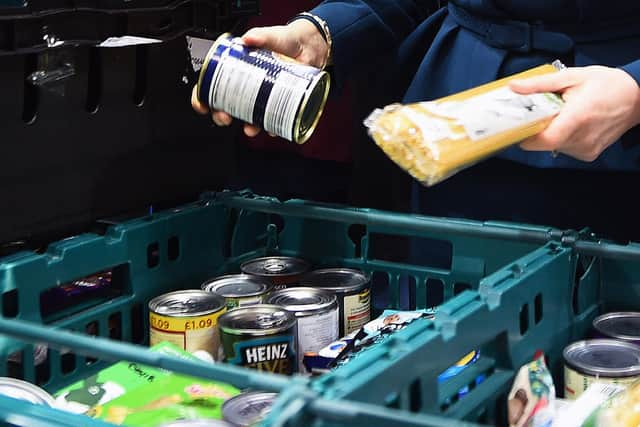

A survey conducted by Ipsos for the charity in Northern Ireland found certain groups such as disabled people and carers were more likely to go without.
While the charity welcomed action announced in the UK Budget last week to tackle the cost of living, it urged the Stormont Executive to redouble its efforts to ensure more people in Northern Ireland can afford at least the essentials.
Ahead of fresh elections next year, it also called for all political parties to commit to a Northern Ireland where no-one is forced to rely on charitable food provision to survive.
The figures from Trussell show one in seven (14%) people have had to cut back on food in the previous three months to afford other essentials like their housing costs, transport to work, or their heating.
Families with children, disabled people and carers, are more likely to go without.
In terms of households with children, 35% had run out of food and could not afford to buy more (compared to 14% of households with no children).
Among disabled people, 36% had run out of food and could not afford to buy more (compared to 15% of people who are not disabled), and of households with a disabled family member, 33% had run out of food and could not afford to buy more (compared to 14% with no disabled household member).
In terms of carers, some 39% had run out of food and could not afford to buy more (compared to 16% of those with no caring responsibilities).
The research also reveals that one in five (21%) working people ran out of food and could not afford to buy more.
It was carried out online with a sample of 5,614 UK adults including 644 in Northern Ireland between May 28 and July 29 2026.
Fiona Cole, Trussell policy and public affairs manager for Northern Ireland, described the findings as devastating.
“It’s devastating that almost 200,000 people in Northern Ireland are at risk of needing to use a food bank,” she said.
“In every community, in every part of Northern Ireland, people are skipping meals so their kids can eat, sitting freezing because they can’t afford money for the meter, feeling isolated and alone, not sure where to turn for support.
“Every day, people are pulling together across communities to make a difference – donating and getting emergency food to neighbours and providing advice and support so that people don’t need to turn to a food bank in the future. But together we can and must go further, particularly as prices rise once more.
“If we’re going to build the fairer Northern Ireland we all want to see, we need politicians to take the heart-breaking scale of hunger in Northern Ireland seriously.
“As we approach the next Stormont election, we need all of Northern Ireland’s parties to commit to ending the need for food banks for good.”
Emma Beggs, manager at Craigavon Area Foodbank, said they are worried about this winter.
“Every week, our wonderful staff and volunteers provide a lifeline through emergency food parcels and practical support to everyone who needs it,” she said.
“We’re really worried about winter. We are doing everything we can to support people in our communities as the colder months close in. But the rising cost of food and energy will make it even harder for us to keep services running.
“Keeping the lights on and spaces open costs money, which is why any support you can give, whether that’s donating food or funds, will make a real difference.”