
David Thompson: Health is deeply political, and differing approaches made a Nesbitt – Burrows clash inevitable
Since the resignation of Mike Nesbitt this week, you’d be forgiven for thinking that the role of a health minister was as some sort of figurehead for the wants and needs of the NHS establishment here.
His departure was met by an unprecedented outpouring of support from political rivals, unions and officialdom. Some of this was simply that he was personally liked, but it goes much deeper than that.
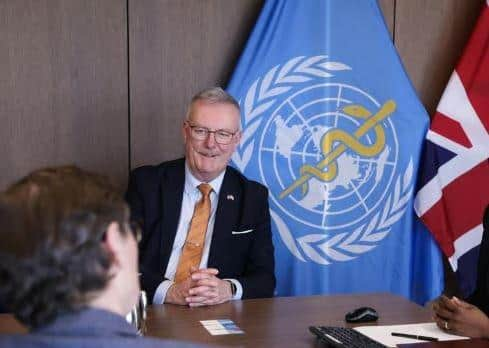

It was perhaps best explained by Dr Alan Stout, chair of the British Medical Association’s (BMA) Northern Ireland Council, who said that the retiring Mr Nesbitt “wasn’t looking for votes”.
The union leader told the BBC’s Talkback programme that the health service “really needed somebody that could make those tough decisions and not be vulnerable politically and electorally, and and so that was a little bit of a gift to us for the coming months”.
That prompted the former DUP special advisor Tim Cairns to ask who was running the department – officials or Mike Nesbitt?
There is no doubt Mr Nesbitt was willing to stand up to vested interests when he was minister, most notably to Dr Stout’s BMA over GP contracts.
Last year, he was the first minister to impose a contract on GPs, who rather than being employees of the NHS operate as individual businesses. Despite the UUP minister giving doctors the 4% pay increase recommended, their leaders threatened to instruct the BMA to hold a referendum on leaving the NHS.
“We need an all Ireland GP service based on their medical card contract”, Dr Stout posted on social media. That resulted in days of pointless discussion about something that isn’t going to happen. To Mike Nesbitt’s credit, he basically ignored them. He had little choice anyway, he didn’t have the money to give them.
There were other highly contentious and political issues which Mr Nesbitt was more than happy to defer to the health service. And that’s where his run-ins with Jon Burrows began.
In his resignation letter, Mike Nesbitt made clear he was not comfortable with being forced to renege on a deal with Sinn Fein and Alliance ministers over banning puberty blockers. He accepted withdrawal from a UK trial of the controversial drugs, even though that was “the price of securing” executive's support for a general ban. “Many Executive colleagues will rightly feel betrayed by my U-turn”, he wrote in his Dear Jon letter.
Until Mr Burrows came along, the UUP’s approach to this issue was to treat it as a purely clinical issue for medics. Had that approach been taken nationally, children would still be routinely medicalised when all they need is support.
Children in Northern Ireland would be part of the controversial puberty blockers trial, but for Mr Burrows’ first ‘red line’ and Mr Nesbitt’s acceptance of it.
There is a fundamental difference in political outlook between the two men, which is nothing to do with the simplistic ‘liberal unionism versus right wing unionism’ narrative. It’s about how politicians govern.
When Mike Nesbitt set up a controversial gender clinic, he defended the influence of LGBTQ+ groups in its design – and rejected the suggestion that their involvement was wrong, despite them having no medical expertise. For the former UUP boss, this was ‘co-design’ – and a “staple” of how Stormont governs.
That’s not how Jon Burrows sees it. He is clearly willing to say no to either lobby groups or officials, if he feels their demands are morally or politically wrong – or if he sees political advantage. He is, after all, a political leader.
The second red line was over the Causeway. It too was a matter of principle – but not one Mr Nesbitt was willing to budge on.
We can only assume that Mr Nesbitt would have made the decision purely based on evidence from within the system, or he would not have resigned. In other words, it didn’t matter about the local community’s feelings on the issue – this is the reform the health service says it needs, and it will get it.
Mr Nesbitt hadn’t, at the time of writing, made any further comment on the week’s events. Apart from a post on social media, where he objected to an AI generated image of himself which had been used to promote a podcast on the affair. An AI app said the face in the image “vaguely has the look of a fictional university professor or senior government official”.
Of course, Mr Nesbitt is not a government official, but an elected representative of the public. His job therefore was to balance the evidence provided by officials with the political position of his party and the people affected by the decisions. It is not credible to pretend that decisions about how our national health service operates can be taken on a purely “clinical” or “evidence-led” basis.
The Department of Health, each of the health trusts and the trade unions all have their own interests and agendas. They are not apolitical, and never will be. Take Causeway A&E as an example. Last year, we reported how consultant cover there plummets at the weekend – a pattern replicated across Northern Ireland. Is that reality based on the clinical need of patients, or the fact that it’s hard to get consultants to work weekends?
The point is, while all parties recognise that reform and rationalisation of our health service is vital, the healthcare system itself has its own internal politics to navigate. At times, that may clash with the needs of patients or the wishes of local communities. What the new minister Robbie Butler must do, unashamedly, is make political decisions.
He cannot be what his rivals want him to be, a figurehead merely signing off the wishes of the medical establishment. The electorate will have the final word on his decisions, and his party’s. That’s democracy.