
Irish Sea border: 'Fix' in place for medicines - but peer warns of 'entirely unacceptable' changes to parcels rules
New Windsor Framework rules have come into effect which put Northern Ireland back under UK regulations for human medicines, loosening the EU control envisaged by the original Protocol.
But DUP peer Lord Dodds has warned that the new rules are only there so long as the EU wishes – and don’t cover medical devices used in the health service. He also says that upcoming changes to parcels rules are “entirely unacceptable”.

Medicines must now have ‘UK only’ labelling to help prevent their movement into the European Union.
The fact that this labelling scheme has gone ahead, unlike a similar scheme for food, highlights the difference between the Framework, as a binding international agreement – and Safeguarding the Union, which was a side-deal between the UK government and the DUP. The latter had promised a food labelling scheme.
The new rules mean that medicines – including those used in the National Health Service – can be approved and licensed on a UK-wide basis by the Medicines and Healthcare products Regulatory Agency (MHRA). That was the situation before Boris Johnson’s deal with the European Union for special trading arrangements for Northern Ireland, which effectively kept the province in the EU single market.
The Framework has also removed certain EU law requirements for medicines marketed and supplied in Northern Ireland.
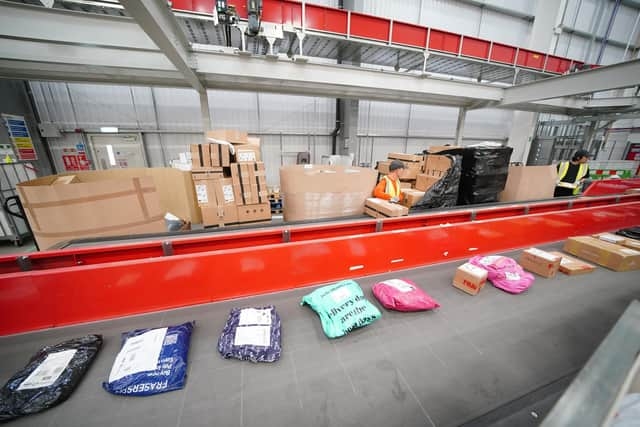
However, Lord Dodds of Duncairn told the News Letter that there is another major issue looming for businesses. The DUP peer said: “Moving parcels from businesses in Great Britain to a business in Northern Ireland is going to get much more complicated from the 1st April 2025. Unless parcels contain goods for sale to, or its final use is by, consumers in Northern Ireland then everything has to go through the full red lane international customs border procedures laid down in the Windsor framework / protocol.
“Such an arrangement is entirely unacceptable. Even parcels moving from a business in Great Britain directly to a consumer in Northern Ireland will be subject to much greater paperwork and data collection. All of this is entirely unnecessary given that there are alternative options open which does not create an Irish sea border.
“Why a fix has been arranged in relation to supply of human medicines from Great Britain to Northern Ireland it is subject to the willingness of the EU to continue to abide by its concession in this area.
“Furthermore, there are no changes to the regulation of medical devices which continue to have to follow the EU legislation for medical device components.
“It should also be remembered that in the important area of veterinary medicine supplies, which can affect human health through the supply of food stuffs, there is still no arrangement or agreement which would alleviate the severe threat hanging over Northern Ireland agrifood businesses”.
The purpose of the Protocol and the subsequent Windsor Framework is to stop British and third country goods leaking into the EU via Northern Ireland – meaning the province largely follow EU standards, with certain exemptions such as this.
To that end, all medicines in the UK must now be labelled ‘UK only’ in a bid to prevent them moving on into the European Union – while ensuring medicines use the same packaging and labelling across the UK.
The measures came into effect yesterday. Therefore, all new medicines and medicines in Northern Ireland that currently fall under the scope of the EU Central Authorisation Procedure will be authorised by the MHRA for the UK market.
These products will only be able to be sold in the UK and will not be available on the market in Ireland or elsewhere in the EU, other than available in the EU as ‘specials’ subject to EU rules and conditions, according to the UK government.
A similar labelling scheme for certain food products was abandoned over fears of placing additional burdens on producers.
The Labour government scrapped the plans – a key piece of the Safeguarding the Union deal – which would have required food producers in Great Britain to put ‘Not for EU’ labelling on their products. It was an attempt by the previous government to prevent any disincentive for companies selling to Northern Ireland.
Its scrapping has meant that some items will no longer be available on supermarket shelves here.
Senior DUP figures say the commitment on food labelling was a key selling point from the party’s leadership when it was trying to convince its executive to accept the deal and end the boycott of the institutions at Stormont.
The disparity between the two highlights the fundamental difference between the Windsor Framework – an international and legally binding agreement between the EU and UK – and Safeguarding the Union, which was a side deal between the DUP and the Tory government, and made no changes to the overall structure of the Irish Sea border. The trade barrier is underpinned by the fact that NI is in a different goods market to the rest of the UK.