
NI women's rights group rejects Equality Commission's legal action over the definition of a woman
Northern Ireland’s equality laws mirror legislation in the rest of the UK – and there is no material difference that justifies the Equality Commission’s refusal to issue guidance in line with a Supreme Court ruling on the definition of sex, a women’s rights group has said.
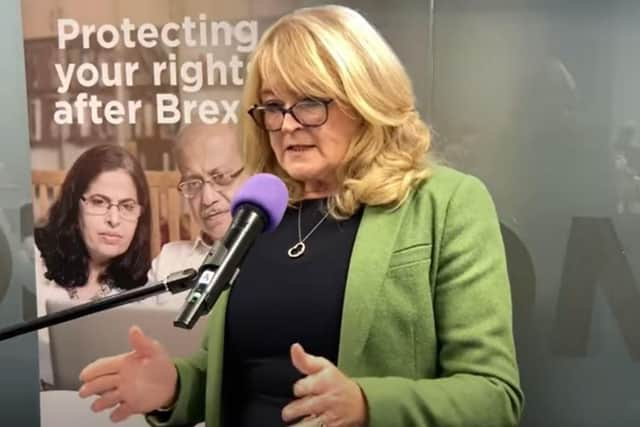
Women’s Rights Network Northern Ireland (WRN NI) has submitted its formal response to the Equality Commission (ECNI) legal action – in which it is seeking “clarity” on the law here.

The equality watchdog claims that the requirements of the Windsor Framework may mean that terms like ‘man’ and ‘woman’ may have a different meaning in Northern Ireland than in the rest of the UK.
WRN NI is the latest group to reject that idea, with similar objections having been raised by campaign group Sex Matters and Stormont’s Department for Communities.
The group’s legal position argues that Article 2 of the framework does not impact upon what the words ‘man’ and ‘woman’ mean and were always intended to mean in NI legislation – and in fact “protects women, girls and lesbians from diminution of their rights should there be a move to change the meanings of these words from their basis in biological sex”.
The group’s response said the Supreme Court judgment “did not change the law: it clarified it”.
A spokesperson for WRN NI said: “The words ‘man’ and ‘woman’ in equality legislation have always referred to biological reality. Northern Ireland’s equality laws mirror the legislation considered by the Supreme Court and there is no material difference that justifies ECNI’s refusal to issue guidance in line with” the ruling from the UK’s top court.
They accused ECNI of embarking on “a prolonged and costly legal process” and engaging in “institutional overreach” which “creates unnecessary uncertainty for organisations and the public” – and which undermines the established rights of women and girls in Northern Ireland.
The women’s rights group has called on ECNI to fulfil its statutory duty to issue guidance consistent with the Supreme Court ruling and not to “seek to dilute the clear meaning of ‘man’ and ‘woman’ in law in Northern Ireland”.
In its legal position, submitted to ECNI, it said that Northern Ireland equality legislation, including the Sex Discrimination Order (NI) 1976 and the Equal Pay Act (NI) 1970, was drafted with the same purpose and wording as its GB counterparts and must be read in the same way.
WRN NI also argues that ECNI’s approach diminishes women’s rights, particularly the rights of lesbians and those in need of single-sex spaces.
ECNI has said that the Supreme Court ruling did not consider the Windsor Framework, and its approach is to seek “legal certainty” and avoid exposing organisations to years of costly litigation and inconsistency.
A spokesperson previously told the News Letter: “That is why the commission is taking the responsible step of asking the High Court in Northern Ireland for a declaration that will address the legal uncertainties that exist following the Supreme Court judgment for the benefit of everyone.”