
Stormont dispute over public sector overspends as civil service chief reminds MLAs ministers are accountable
There is a growing dispute at Stormont between politicians and civil servants over who is responsible for huge overspends in public sector projects – with the DUP accusing the civil service of “financial mismanagement” and the head of the civil service reminding MLAs that elected ministers run departments.
A DUP member of the Public Accounts Committee says the civil service needs an overhaul to be more accountable for public sector spending, after a £2.45 billion overspend on major capital projects was unearthed last year.
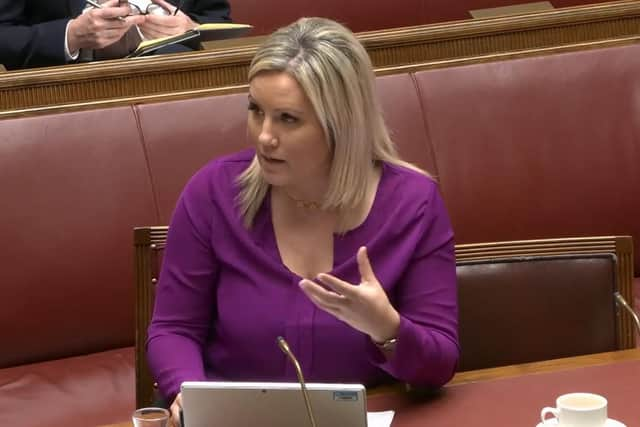

Diane Forsythe says the “scale of financial mismanagement within the Northern Ireland Civil Service (NICS) is deeply concerning”. She has called for greater accountability in how overspend and time overruns in the delivery of publicly funded projects are dealt with.
However, in a recent evidence session in Stormont the Head of the Civil Service (HOCS) Jayne Brady highlighted the responsibility of elected ministers in delivering within their departments – after MLAs sought to question the role of the NICS Board in keeping overspends in check. Ms Brady said the civil service board was aiming to improve the overview of the financial situation.
It comes after an NI Audit Office report last year revealed that between April 2019 to 31 August 2023, out of 77 major capital projects managed by Stormont departments, the majority saw increases in the original estimated costs – with a total overspend of £2.45 billion.
Jayne Brady recently told the Public Accounts Committee that 50% of the overspend was caused by inflation. Ms Brady and Neil Gibson, the accounting officer at the Department of Finance, recently faced questions from MLAs on the overspend and what NICS is doing to control it.
Ms Forsythe questioned the role of the NICS Board – and whether they are informed about cost overruns. Mr Gibson said they currently were not – saying they are “always conscious of not creating another level of bureaucracy or scrutiny”.
“So obviously, within committees and within individual departments, accounting officers have to speak to all of their deadlines, delays, cost overruns. So there’s already significant scrutiny there”, Mr Gibson said.
He said that despite ongoing efforts to get better data, the NICS board would not have the same level of data available to it as is available to MLAs at departmental boards.
Ms Brady highlighted existing mechanisms – and the responsibility of accounting officers in each Stormont department, under the direction of elected ministers.
But Ms Forsythe called for greater oversight of major projects as a whole from the civil service, as well as “collective leadership and breaking down perceived silos”.
Ms Brady said that new information available to NICS would allow her to make “more qualified judgements” – but “without going over the responsibility of a minister for delivery within his department”.
SDLP MLA Daniel McCrossan, who chairs the PAC, asked about a previous statement made by Ms Brady that neither she as HOCS, nor the NICS Board, have any authority over accounting officers. He questioned how she or the board could have confidence it was delivering “effective leadership over major capital projects”.
Ms Brady said that the NICS Board has begun gathering data to allow informed decisions to be made – but said “ministers direct their departments” and that accounting officers in departments are “under the direction and control of their minister, but I am their line manager”.
DUP MLA Diane Forsythe said: “The recent revelation of a £2.45 billion overspend on major capital projects raises serious questions about oversight, accountability, and the responsible use of taxpayers’ money.
“This level of overspending is completely unacceptable, and what is even more alarming is the failure of the NICS to address it. When probed on the matter, it became clear that accountability mechanisms are wholly inadequate. The NICS Board does not have proper oversight. This is a system that lacks scrutiny and operates with a mega silo mentality.
“It was even more astonishing to hear a senior civil servant, appearing before the Public Accounts Committee, indicate they did not wish to create another layer of scrutiny. That mindset must change. Taxpayers deserve better. Investment in public services is vital, but so too is ensuring projects are delivered on time and within budget. The NICS must urgently change its approach to achieve better outcomes with hard earned taxpayers’ money, and better accountability is key to achieving this end.”