
Relatives of murdered loyalist bid to stop publication of final report into Dublin and Monaghan bombings
Relatives of a murdered loyalist are seeking to stop publication of a final report into a notorious terrorist gang behind the Dublin and Monaghan bombings, the High Court heard today.
Counsel for the family of William Marchant confirmed their legal challenge was aimed at preventing full disclosure of the Operation Denton findings.
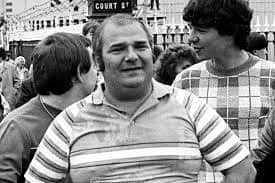

Detectives involved in the ongoing probe have been examining nearly 130 murders during the 1970s attributed to the so-called Glenanne Gang.
Based in the Mid Ulster area, the terror unit was said to have comprised members of the UVF along with some corrupt RUC officers and locally-recruited UDR soldiers.
It was blamed for the attacks on Dublin and Monaghan in May 1974 when 33 people, including a pregnant woman, were killed and almost 300 others injured in coordinated explosions.
The 1975 Miami Showband massacre has also been attributed to members of the Glenanne Gang.
In December last year a summary issued by the Operation Denton team found evidence of collusion between loyalist terrorists and some police officers and members of the military at the time.
However, no evidence or intelligence of state collusion in specific UVF attacks was identified.
Those findings were released following a failed attempt by the Marchant family to obtain a High Court injunction. However, they are pressing ahead with a wider legal challenge against the final Operation Report.
Concerns have been raised that Marchant could be linked to the Dublin and Monaghan attacks through jigsaw identification.
Widely reported to have been a leading loyalist figure, he was shot dead by the IRA on Belfast’s Shankill Road in April 1987.
Lawyers representing his family claim police do not have legal power to commission a non-criminal investigation through Operation Denton.
Part of the case relates to an alleged briefing of campaign groups in Dublin in October 2025.
The Marchant family also contend there was no statutory authority to permit the disclosure of intelligence material outside the jurisdiction.
They were initially seeking an order to quash any part of the Denton report which named or made adverse findings against him, based on alleged breaches of the Police (Northern Ireland) Act and Articles 2 and 8 of the European Convention on Human Rights.
But in court today counsel for the family, Emma McIlveen, confirmed the case has expanded into seeking to prevent any publication of the final report.
“We are challenging the legality of the whole operation,” she said.
“If the court is with us on that it impacts on the publication of the report.”
It also emerged that relatives of another man said to have been named at the briefing in Dublin have also issued judicial reviewing proceedings.
Their barrister, Richard McConkey KC, obtained an interim anonymity order after arguing that the man has never been named publicly.
Counsel for the investigation team claimed the challenge should be put on hold until the final report is submitted to the PSNI, who will then decide on a potential publication date.
“Denton is trying to wrap up its work, it’s in the very final throes of its existence,” he said. “Requiring personnel to deal with a judicial review in the next few weeks would invite delay in that work.”
The court also heard that relatives of a number of victims are seeking the status of notice parties in the proceedings.
Adjourning the case until next month, Mr Justice McLaughlin expressed doubt over claims of urgency in dealing with the challenge.
He told Ms McIlveen: “The legal basis upon which Operation Denton has been established is not a surprise to anyone, it’s been in the public domain for four or five years.”
Speaking outside court on behalf of the Marchant family, loyalist activist Jamie Bryson confirmed the case has widened.
He said: “The challenge seeks to halt the publication of Operation Denton per se, on the basis it was never in fact lawfully constituted.”