
Armed forces minister Al Carns dramatically quits over Labour's Northern Ireland Troubles Bill
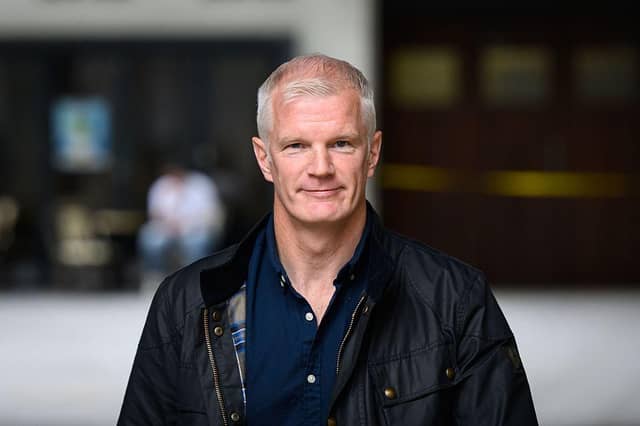

The armed forces minister Al Carns has dubbed the Northern Ireland Troubles Bill “unfit for purpose”.
He said he is quitting over the bill in his resignation letter last night.
It has long been rumoured that the government’s failure to progress the bill was at least in part down to his opposition to it.
Last July, he was reportedly on the cusp of quitting over it.
The Times had reported that “the veterans minister is expected to resign over government plans to repeal the law that granted Troubles-era servicemen immunity from prosecution”.
He “is said to have told ministers that he cannot support any proposal that would leave veterans vulnerable to criminal proceedings,” the Times reported – though the government insisted Mr Carns was “in lockstep” on the issue.
The other reason given for his resignation last night is his opposition to what he sees as a lack of funding for the military and the government’s unwillingness to address it.
Mr Carns said: “The same instinct, that serious problems can be managed rather than faced, runs through the Northern Ireland Legacy Bill.
"I have worked to fix the Bill from the inside, but it remains unfit for purpose.
"It risks failing the very veterans it claims to protect.
"Men and women I served with, those I buried friends alongside, people who did their duty under conditions most individuals in Westminster will never have to imagine.
“I set out the changes I believed were necessary, and the lines which I could not in good conscience go beyond.
"Those lines have not been accepted.
"I have run out of room to argue this case honourably from inside government.
"A serving minister cannot ask fellow veterans to trust a process he no longer trusts himself.
"These two failures are the same failure.
"We ask soldiers to fight for this country.
"In return, we owe them the kit to do the job and the loyalty to stand by them when it's done.
"We are failing on both.”
The Troubles Bill will replace the Tories’ Legacy Act, which barred police investigations and inquests into Troubles events, and which has already been partially repealed.
It is proceeding ahead with the input of the Irish government, which has pledged to act in “the fullest possible co-operation” with UK authorities, and is supposed to be bringing in its own Troubles bill to ensure that happens.
The Irish proposals have been criticised as lacking substance, however, and Dublin’s input into the process has been questioned.
Jim Allister has previously said: "If the UK government had any guts and cared for innocent victims, it wouldn’t be in craven complicity with Dublin in shaping legacy proposals to meet their demands, while the Republic itself does nothing to own up to the blood of soldiers and civilians on its hands.”
Another critic of the bill has been Jeff Dudgeon, the former UUP councillor who is convenor of the Malone House Group, set up in 2018 to "find the best means to address the past”.
In an attempt to mollify critics of the bill, the government last year announced what it called “six new protections, rights and safeguards for Northern Ireland veterans”.
These were:
That veterans cannot be forced to travel to Northern Ireland to give evidence at inquests or for the Legacy Commission; that veterans will not be “needlessly re-investigated by the Legacy Commission unless there are ‘compelling reasons’"; that commissioners and coroners are required to take health, age, and wellbeing into account; that veterans can request anonymity when giving evidence; that veterans will only be contacted through official MoD channels; and that veterans’ representatives will be guaranteed a place on a statutory Victims and Survivors Advisory Group.
Mr Dudgeon said the government is engaged in “smoke and mirrors” over the issue, because with most of these six “protections” not being specific to veterans, but available for everyone – including former paramilitaries.
Last November, Mr Carns defended them, saying: "We promised our veterans who served with honour in Northern Ireland that we would put proper protections in place, and our legislation delivers on that commitment.
“After the false promises of the last government, we are putting in place six real, workable protections for veterans that the failed Legacy Act never did.
"We will not allow the process, like so many times before, to become the punishment for our veterans.
“Having served for 24 years and as a serving reservist myself, I understand the importance of avoiding an endless cycle of investigations.
"These robust safeguards will ensure the rights of those who served their nation so honourably are protected whilst providing families with a fair and transparent system to seek answers."
But when the Troubles Bill was debated in the Commons in April, Mr Carns was absent.
"I note that the Minister for the Armed Forces is not here for the vote, and I entirely understand why: he wants to avoid association with this disgraceful legislation,” said Tory MP David Davis at the time, though the MoD said it is “completely untrue” to say Mr Carns was opposed to the bill.