
Data watchdog rules flag dispute councillors entitled anonymity over 'safety' concerns - but PSNI haven't received 'any complaint'
Elected councillors in Northern Ireland are entitled to anonymity when making certain political decisions if they believe they are at risk – and releasing the names of councillors who objected to a local council’s flag policy would therefore be “unlawful”, the Information Commissioner has ruled.
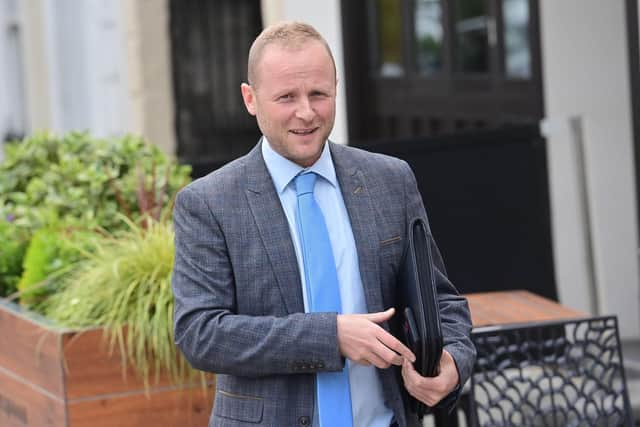
The judgement relates to an attempt by loyalist Jamie Bryson to obtain the names of councillors involved in a ‘call-in motion’ to halt the flying of the Union Flag 365 days per year from war memorials in the Ards and North Down (AND) council area.

The council refused to reveal the names, after objections from the councillors involved, and the Information Commissioner’s Office (ICO) has backed their decision.
Mr Bryson has said the decision means that elected representatives can make decisions “from behind the cloak of anonymity and thus escape any political or public accountability for their actions”.
The call-in motion had meant that a majority vote of councillors to fly the flag permanently was overturned. The motions have been built into the local government system in Northern Ireland as a protection for minorities, but various parties have been accused of abusing the system.
In a court battle last year, AND council accepted Mr Bryson’s argument that the motion was out of time and therefore not legal – and the original 365 day policy has been reinstated.
In its ruling on the matter, the ICO said it is “considered reasonable for these individuals to expect council to protect their identities when asked to do so, especially if there is a potential for harm or danger if this information is disclosed”.
It also said that the commissioner accepts “that there are certain sensitive topics in Northern Ireland politics which make it more problematic for elected representatives, especially when these representatives are in a minority”.
The judgement added that the council “had already abandoned their attempt to withhold the content of the call-in requisition, having accepted this was legally unsustainable, therefore this case was narrowed to be about whether the identity of those councillors who exercised this minority veto could be concealed from the public”.
In addressing the concerns of the anonymous councillors, the ICO described the issue of flags as an “extremely sensitive topic” in Northern Ireland – citing riots in Belfast in 2012/13.
It said that the councillors who brought the motion “are fearful of being targeted” and “are aware of comments on social media regarding this”. The ruling added that the councillors “are highly concerned about what conduct might be levelled at them if they are named”.
However, police say they have not received “any complaint regarding this matter”.
The ICO says that the councillors are opposed to the release of their identities “from a safety perspective”. The information watchdog also held that it would be “reasonable for these individuals to expect council to protect their identities when asked to do so, especially if there is a potential for harm or danger if this information is disclosed”.
The commissioner concluded that “there is insufficient legitimate interest to outweigh the data subjects’ fundamental rights and freedoms”.
Jamie Bryson told the News Letter that the decision “is fatally flawed, and self-evidently wrong in law”.
"The decision was received around 4:30pm, and a substantive appeal to the First Tier Tribunal was lodged by 5pm on the same day. There has been a request for expedition, such is the significance of this decision and wider ramifications.
“The ICO has essentially determined that elected representatives, exercising a public power to use a controversial 'call-in' mechanism as a minority veto to subvert the decisions of a democratically elected majority, may do so from behind the cloak of anonymity and thus escape any political or public accountability for their actions. That is repugnant to the most basic democratic principles and is a novel invention which is hitherto unknown to the law.
“It is an extraordinary usurping of the principles of democracy and accountable decision making whereby, on the ICO's case, a public power- conferred on elected representatives solely due to their holding of that office - may be anonymously and secretly exercised”.
The News Letter asked the Police Service of Northern Ireland (PSNI) whether it is investigating the councillors’ concerns, given their serious nature, and the impact they are having on the democratic process in Northern Ireland. We also asked if they would commit to doing so if there had been no investigation.
A PSNI spokesperson said: “Police have not received any complaint regarding this matter and as such there is no investigation at this time”.