
David Thompson: Drumcree should see a new generation of loyalists in court - for the right reasons this time
For almost 30 years, the Orange Order, unionism and loyalism has had little success in challenging a parading regime which it sees as unfair and has long suspected had made up its mind on disputes like Drumcree – until now.
The revelations this week about how the Parades Commission has been conducting its business are nothing short of scandalous – and open up legitimate questions about whether this is the first time it has conducted its business in such a shoddy manner.
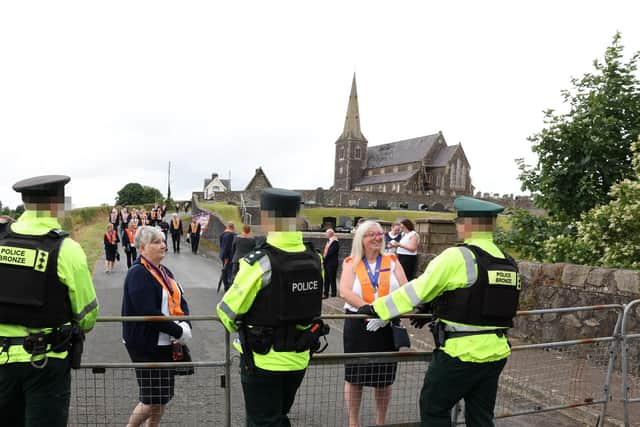

It would be mighty unfortunate for the body if this was the only example of such sloppy decision-making out of the 150-odd determinations it makes on contentious parades each year. And another unfortunate fluke that it happened on the most infamous parading dispute of all.
Lodges and bands who believe the commission is fundamentally biased will have had their perception, unfair or not, reinforced by the farce exposed in court this week.
What this series of events have demonstrated is that far more can be achieved through legal and political means than can ever be through street protest or violence.
The thuggery which surrounded the Drumcree protests in the 1990s did untold damage to the Orange Order and the broader unionist and loyalist cause at a time when the world’s eyes were on Northern Ireland.
It did even more damage to the people caught up in the summers of violence surrounding it.
The incident which will always stick in my head is the murder of the Quinn children, Richard, Mark, and Jason.
I went to school in Ballymoney when this sectarian atrocity happened. Their school photo still haunts me to this day.
Partly because it was close to home, and because I knew some of their relatives. Even their name, half my own family are Quinns.
But maybe more viscerally because they looked just like myself and my two brothers, with their shaved blond heads and cheeky smiles in their school photo.
Similar pictures hung in my own house. Ordinary children from an ordinary estate, their parents’ pride and joy. Except the Quinn boys never got to grow up.
RUC officer Frank O'Reilly, 30, a father of three, died that same year – murdered during loyalist protests linked to Drumcree.
He had suffered horrific injuries in a loyalist blast bomb attack on the forces of law and order in Portadown.
Michael McGoldrick, a young Catholic father out working to provide for his family, was also killed by loyalist terrorists over the dispute.
While Drumcree did serious damage to relations between the two main communities here, it also caused deep damage within the unionist and loyalist community.
Countless young men ended up in jail and with criminal records – undoubtedly even more were sucked into loyalist paramilitary groups over it. RUC officers were threatened or intimidated from their homes.
None of that made one bit of difference over the issue at hand for unionists and loyalists – the fundamental injustice of being banned from traditional parading routes.
The issue had grown up amid attempts by republicans to use the parading issue as a distraction from their own political surrender in 1998. British rule had gone from being so unacceptable in republican eyes they justified the murder of their own people – to being OK so long as they could administer bits of it.
Sinn Fein consistently whipped up tensions over Orange marches across Northern Ireland in the 1990s. It gave their more hot headed ‘community representatives’ something to do which didn’t involve questioning how their party had just accepted partition.
By this stage, republicans were far more savvy in their use of the law and courts. For decades, they had used the law to pursue their ends – entirely legitimately. However, their inability to commit to lawful means left nearly hundreds dead and many tens of thousands injured.
By the time the IRA had stopped its slaughter, whether of the sectarian kind or the kind which indiscriminately targeted civilians of all backgrounds, unionism felt on the back foot.
Perhaps that’s why Drumcree became the flashpoint it did. For many loyalists, it was the perfect symbol of nationalist intolerance of their culture, or even existence. For republicans, it symbolised a power shift – unionists would no longer walk the streets without their consent.
In the decades since, unionists and loyalists have been remarkably poor at standing up for their own interests through the courts. Attempts to rally people into protest have largely fallen flat, or made no impact whatsoever. The world has moved on.
This week’s public humiliation of the Parades Commission is largely down to the efforts of Jamie Bryson, a man who started off as a street protestor himself.
But he is now an advocate for young loyalists and unionists to get involved in the legal system, public institutions, the media – and fight for the changes for their community that they want.
And for a young loyalist or unionist with no real knowledge of the horrors of the past, it should serve as an example that if you feel that your community has been unfairly treated – there is only one response.
That is to get educated and argue your case – whether in politics, the media or the law.
Ask your political leaders what they have achieved for you, and if you don’t like the answer – go and do it yourself.