
Havelock House: 104 social homes approved for former UTV headquarters, despite Housing Executive saying that's far too many
The former headquarters of UTV has been approved as 104 social homes – despite the Housing Executive saying that’s far too many.
Near the end of last year, a developer was given permission to build a large housing scheme on the former site of Havelock House on Belfast’s Ormeau Road.
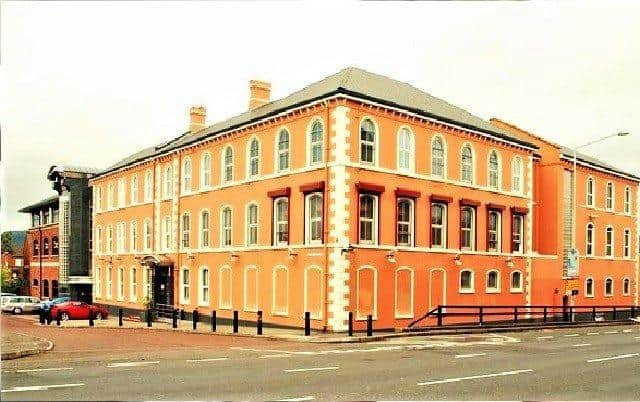

At the time, Belfast Council imposed a condition saying all 104 planned units have to be social homes – but the Housing Executive, which oversees social homes across Northern Ireland, subsequently objected, saying that’s far too many.
The body says at most 80% of the project should be social homes, with the rest low-cost housing for either renters or owner-occupiers.

Last week the council overruled the Housing Executive, approving the Havelock House development for a second time with the condition that the whole scheme must be social homes.
During a planning committee meeting, one councillor pointed to a social housing shortage across Belfast, stating the city urgently needs around 700 extra units, and argued Havelock House would make a big difference in a deprived area.
The committee overwhelmingly voted to approve it as 100% social housing, with only 15 councillors in favour of the move while only three councillors objected.
In a letter to the council, a senior Housing Executive official argued that the idea goes against moves to have areas be mixed instead of having pockets exclusively comprised of social homes.

That part of Belfast already has far more social housing than usual, stated the official, and far fewer owner-occupiers – with only around one in five occupiers owning their homes, compared to a citywide average of one in every two.
“Consequently, there is a sound factual basis to include a broader tenure mix of homes,” the official said, adding that low-cost sale or rental properties would provide “a quality home ownership choice for those households requiring affordable homes”.
Having all 104 units be social housing would go against current policies advocating for mixed neighbourhoods, she stated, and would also work against ambitions to vastly increase the number of people living in the heart of Belfast.
“The ambition to increase city centre living will only be successful with a mixed tenure approach, rather than large mono-tenure developments,” she said.
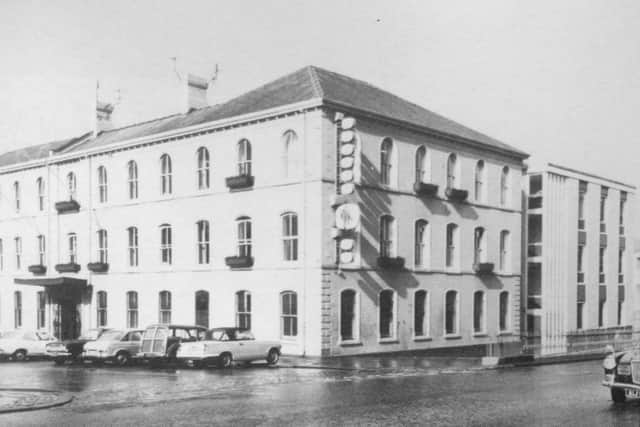
The official also pointed out that problems finding homes apply not only to waiting lists for social housing, but also to people struggling to find affordable rental accommodation or to get on the property ladder as first-time buyers.
“Preventing homelessness and reducing housing stress requires the provision of more diverse housing types across different tenures, along with alternative models of housing to meet different housing needs,” she stated.
Over its 150-year history, Havelock House hosted businesses as varied as a linen warehouse, troop accommodation and a goods showroom before becoming the home of UTV in 1959, with two main studios where many of the province’s favourite shows were filmed.
UTV moved to Belfast docks in 2018; the building was briefly an art studio and gallery, but Havelock House was demolished at the start of 2024 to make way for the new social home scheme.
The demolition was controversial, as the wrecking ball went in just days before a public consultation on the developer’s plan for the site was due to begin.