
Irish legacy situation 'scandalous' says DUP MP Carla Lockhart after Veterans Commissioner lambasts Dublin for 'facilitating slaughter and ducking responsibility'
The DUP has moved to back up the comments of the NI Veterans Commissioner, after he lambasted the Irish state's history of "ducking out" of responsibility for Troubles violence.
David Johnstone questioned where the "accountability" will be in Dublin's new legacy arrangements, asking "who's scrutinizing the Irish government?"
He had been speaking to MPs on Wednesday at Westminster's Northern Ireland Affairs Committee, and now DUP MP Carla Lockhart has added her voice too, calling the situation with the Dublin government "scandalous".
Under a deal between the Labour government and Dublin, announced in September, the Irish government announced "the creation of a new dedicated Legacy Unit within An Garda Siochana" as well as a plan for "the fullest possible cooperation with the reformed Legacy Commission" (the government's revamped version of ICRIR – the Independent Commission for Reconciliation and Information Recovery).
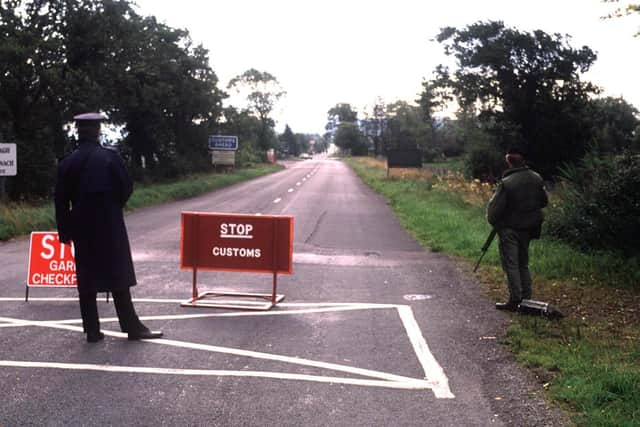

Unionists have been critical of London's engagement with Dublin over the Troubles legacy, pointing to long-standing grievances about how the state dealt with republican paramilitaries, the Irish government's interstate legal action against the UK government, and what they see as Dublin's failure to cooperate with the Omagh Bomb Inquiry.
They have questioned why, under such circumstances, the Irish government was being allowed input on the shaping of the government's legacy mechanisms.
Speaking at the committee this week, Mr Johnstone said "we definitely welcome the fact there seems to be movement; the new unit being set up [in Dublin] to facilitate that should provide some information for families".
But he went on to add: "One concern that veterans would definitely have is the accountability.
"So for the legacy Commission and the different structures that are involved in Northern Ireland, there is oversight... but who's scrutinizing the Irish government?
"Who's going to ensure that they provide all the information that they have?"
He also said: "One of the scandals of the troubles has been the ability of the Irish government to duck out of responsibility.
"There's absolutely no question that they facilitated, certainly turned a blind eye to, the slaughter of armed forces, to the slaughter of policemen and women, and indeed to the slaughter of ordinary Protestants or Roman Catholics in Northern Ireland."
Mrs Lockhart has now largely echoed this, telling the News Letter: “From the start of this process we have highlighted the government’s complete failure to put any pressure on the Irish government.
"They have deferred to them and allowed them to act as some sort of impartial observer.
"For decades, the Irish government have wilfully failed to provide answers for innocent victims of terrorism and their families.
"The legacy proposals do nothing to move that on.
"The scandalous approach has seen the Irish maintain their inter-state case whilst the Secretary of State signed up to the framework without any assurances of its withdrawal."
The interstate legal case was launched by Dublin in December 2023.
It involves taking the UK government to the European Court of Human Rights to have the UK's Legacy Act – which was drawn up under the previous Tory government – declared unlawful.
Though the Labour government has been in the process of replacing the Legacy Act anyway, the interstate legal case remains live.
Ireland’s Department of Foreign Affairs has been contacted for comment.
Meanwhile the Northern Ireland Office said: "The Joint Framework includes unprecedented commitments by the Irish government.
"These include legislating for the Irish authorities to provide full cooperation with the Legacy Commission, investigating all outstanding legacy cases in Ireland’s jurisdiction and setting up a new legacy unit in the Garda to handle all legacy cases.
"We are confident these commitments will be honoured by the Irish government.
"Oversight arrangements are a matter for the Irish government, but it will ultimately be families that will judge whether each government has fulfilled the commitments they have made.”