
No 'hard evidence' to justify concealing flag dispute councillors' identity - Freedom of Information expert
A leading expert in transparency laws says he is surprised by a ruling by the UK data watchdog – backing a council over its decision to conceal the names councillors involved in a flag dispute from the public – saying there is no “hard evidence” to justify it.
The Information Commissioner’s Office (ICO) said last week that naming councillors who submitted a call-in motion at Ards and North Down (AND) Borough Council would be “unlawful”. The councillors are opposed to the release of their identities “from a safety perspective”.

The ICO suggested there “is a potential for harm or danger” if they are named – but the PSNI says it has received no complaints about the issue.
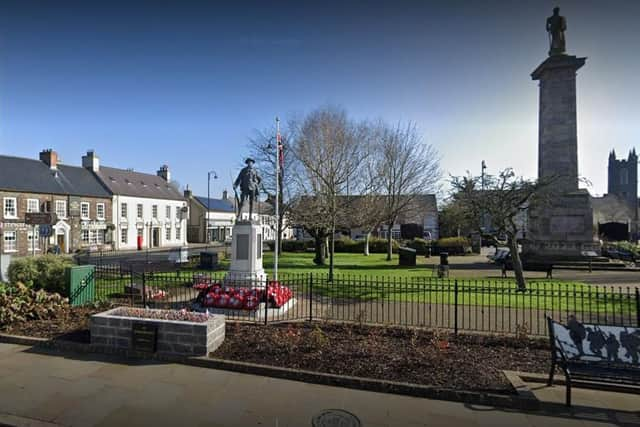
It relates to a move, backed by the Alliance Party, to use a mechanism established to protect minorities to overturn a majority vote in favour of flying the Union flag 365 days per year at war memorials in the borough.
That was later overturned on a technicality after a legal case taken by the loyalist Jamie Bryson. AND council accepted Mr Bryson’s argument that the motion was out of time and therefore not legal – and the original 365 day policy has been reinstated.
Former BBC journalist and FOI expert Martin Rosenbaum says the information should be in the public domain.
He told the News Letter: “It seems to me that the ICO is adopting an ultra-cautious approach, in the absence of any hard evidence to suggest it is justified. I’m surprised by their decision. If the case is now appealed to the tribunal, then the final outcome could well be different.
“In my view it is important the electorate knows what political stances councillors are adopting on council business, so that voters can decide properly if they are satisfied with the work of their elected representatives and are well-informed for whether they want to vote for them in future.
“When decisions are taken by local councils or other public authorities, the reasons why those decisions are taken should be out in the open, so that they can be scrutinised and discussed”.
Mr Bryson, who initially requested the names of the councillors involved in the motion, has lodged an appeal with a tribunal which deals with ICO rulings. He said the commissioner’s decision means that elected representatives can make decisions “from behind the cloak of anonymity and thus escape any political or public accountability for their actions”.
In its ruling on the matter, the ICO said it is “considered reasonable for these individuals to expect council to protect their identities when asked to do so, especially if there is a potential for harm or danger if this information is disclosed”.
It added that “that there are certain sensitive topics in Northern Ireland politics which make it more problematic for elected representatives, especially when these representatives are in a minority”.
The judgement said the council “had already abandoned their attempt to withhold the content of the call-in requisition, having accepted this was legally unsustainable, therefore this case was narrowed to be about whether the identity of those councillors who exercised this minority veto could be concealed from the public”.
In addressing the concerns of the anonymous councillors, the ICO described the issue of flags as an “extremely sensitive topic” in Northern Ireland – citing riots in Belfast in 2012/13 after the council there ended its policy of flying the flag year round.
The ICO said that the councillors who brought the motion in AND council “are fearful of being targeted” and “are aware of comments on social media regarding this” – adding that the councillors “are highly concerned about what conduct might be levelled at them if they are named”.
The information watchdog also held that it would be “reasonable for these individuals to expect council to protect their identities when asked to do so, especially if there is a potential for harm or danger if this information is disclosed”.
The commissioner concluded that “there is insufficient legitimate interest to outweigh the data subjects’ fundamental rights and freedoms”.
Asked if it is investigating the councillors’ concerns, given their serious nature, and the impact they are having on the democratic process in Northern Ireland, the Police Service of Northern Ireland said it has “not received any complaint regarding this matter and as such there is no investigation at this time”.