
Northern Ireland's hidden homeless: why the real number is three times the official one.
Formally, homelessness in Northern Ireland represents over 7,500 households presented to the Housing Executive as homeless between October 2025 and March 2026, of whom 5,039 were accepted as statutorily homeless. These statistics reflect the highest recorded for a winter period in years, and the Chartered Institute of Housing has warned that stalled budget negotiations at Stormont risk undoing what little progress has been made in reforming emergency housing. Despite that, these figures are only the part of the crisis that shows up on paper.
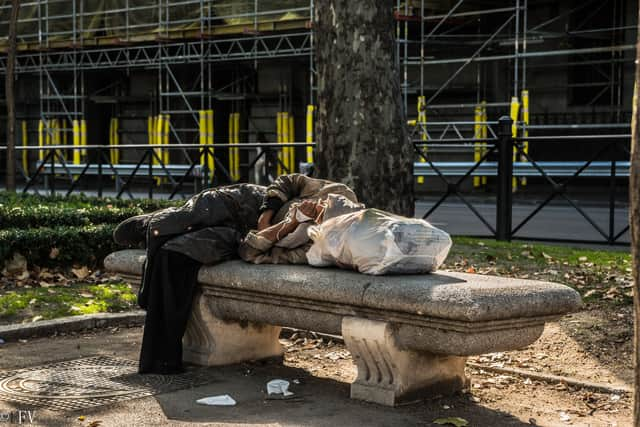

Hidden homelessness describes people who lack a permanent, secure home of their own, but live out of sight. Research commissioned by Simon Community put the number of people experiencing "hidden homelessness" in Northern Ireland at around 23,000 – With FactCheckNI independently reviewing that estimate and deeming it credible. With the help of these additional figures – the picture changes entirely.
That gap is not evenly spread. And that, more than the headline numbers themselves, is the part worth paying attention to.
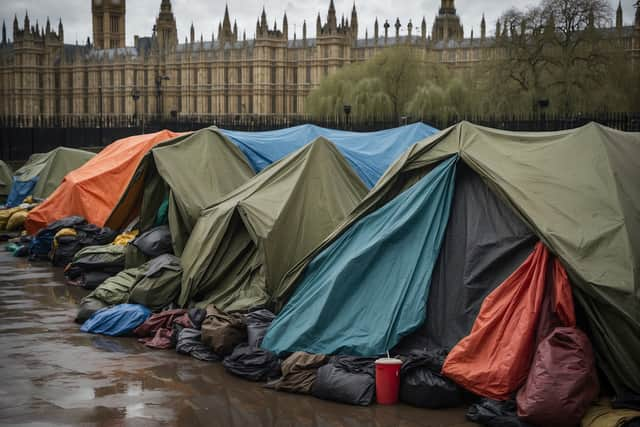
I've made this argument before, in a piece for this paper on how homelessness mapping in Britain systematically undercounts rural areas. The same structural blind spot exists here, and the newest data makes the case more precisely than I could before. It can be safely presumed that where the official statutory homelessness is recorded, it clusters where the actual infrastructure to record it exists – such as Belfast, Derry, the larger towns along the M1 and M2 corridors, wherever a Housing Executive office, an outreach team or a hostel bed is within reach. Naturally, hidden homelessness doesn’t cluster around infrastructure – but around its absence. Simon Community's own research points to exactly this dynamic: people in rural and border areas are less likely to present to a housing authority at all, not because their situation is less severe, but because the nearest office might be forty minutes away, because they don't trust that a single overstretched outreach worker can help, or because rural homelessness rarely looks like a tent on a street corner
This gap in evidence narrows the vision of the policymakers. A map built purely from statutory presentations will always show Belfast as the crisis and the border council areas as comparatively fine. A map that could account for hidden homelessness (imperfectly, because by nature it resists precise measurement) would very likely show something closer to the opposite. Underneath both figures sits the same driver - the cost of a home here has moved further out of reach than at any point in the devolved era. NISRA's own house price index shows the standardised price of a Northern Ireland property has climbed from just over £110,000 in early 2015 to nearly £200,000 at the start of this year. This reflects an increase of close to 80% in a decade, comfortably outpacing wage growth over the same period. That increase does not fall evenly either, in rural and border council areas with thinner housing stock and fewer social lets, a small rise in private rents can be the difference between a family staying housed and a family becoming hidden homeless – which remains invisible to the Housing Executive.
The recent bulletin shows the Housing Executive has increased its use of managed leased properties by 446% year-on-year, which will cut reliance on hotels and B&B’s by 9% - which is a genuinely hopeful data point. But it is also, unavoidably, a fix aimed at the visible 5,039. It does nothing for the 23,000 who never did, and there is no equivalent Stormont programme currently aimed at finding them.
What needs to happen is a willingness to treat hidden homelessness as a policy problem with its own geography, rather than a footnote to the official count. Until that happens, the Housing Executive will keep managing a crisis whose real shape it can only partly see.
Written by Alexander Weilds, student at Shrewsbury School.