
Uk Government's Digital ID plan is a ‘huge new cyber risk’ say Tories
The government is opening up a “huge new risk” with its digital ID scheme amid plans to bolster the UK's cyber security, the Tories have said.
Shadow science, innovation and technology secretary Julia Lopez branded the government “negligent” for working to close gaps with new cyber security legislation, while also “creating new vulnerabilities for adversaries to attack”.

The Cyber Security and Resilience (Network and Information) Systems Bill builds on regulations introduced in 2018 that apply to the country's critical national infrastructure, including energy, transport, drinking water and digital.
The bill, which had its second reading in the Commons yesterday, is set to expand the scope of these regulations and give regulators greater powers to enforce them.
Its measures include requiring regulated organisations to report more cyber incidents, and allowing regulators to impose higher fines for companies that fail to comply with rules.
Ian Murray, minister for digital government and data, said the bill aims to protect the public and strengthen national security, without placing undue demands on business.
He said: “At its core, this bill is about protecting the essential services that we all rely on, so the lights always stay switched on, clean water always runs in the tap, and hospitals are always safe and secure when we need them – the real life community issues that we all encounter every single day and all of our constituents encounter every single day.
“This is more than a technical upgrade, it's a bold commitment from government to protect one of our biggest economic strengths and to keep the UK safe in a rapidly evolving digital world.
“Together, working towards a future for security is not a hope, but a guarantee.”
However, the Conservatives' Ms Lopez argued that the bill does not address cyber risks in the public sector, which she said are “red light flashingly large”.
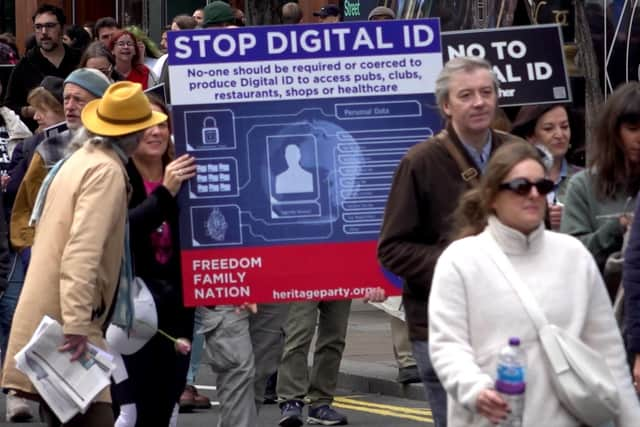
She said: “Knowing that the public sector holds such enormous cyber risk, this Labour government chooses not to minimise it, but to create a brand new one: a hulking great identity system mandated for anyone who wants a job, and now we hear, possibly for newborn babies.
“Mandatory identity by stealth, not consent, and with no honesty about it.
“It is not to be against the ability of people to verify themselves digitally for banking or to access certain online services or to stop fraud, to think that Labour's mandated digital identity plan is a complete rotter.”
She added: “We do support this cyber bill in principle. The threat is real, growing, and it demands actions, but it can be seen as only a tool, not a cure all.
“A government trying to close down gaps in one place while wilfully opening up huge new risks in a different corner, is being negligent in its approach.”
She also argued that the bill would do little to prevent high-profile cyber shutdowns like at Jaguar Land Rover, as private companies are not covered by the bill.
Labour MP Matt Western, chairman of the Joint Committee on the National Security Strategy, said digital ID had proved “secure” in both Estonia and Denmark.