
Fresh doubts over Stormont's climate law as MLA warns Scottish green energy could be classed as fossil fuel
Green energy produced elsewhere in the UK “could be classified as a fossil fuel” and cannot be used to help Northern Ireland meet its ambitious greenhouse gas targets under rules flowing from Stormont's climate change legislation, an MLA has warned.
Ulster Unionist Diana Armstrong says that the “bizarre” energy regulations must be changed so that widely available renewable energy from the rest of the country – transferred via an interconnector with Scotland – can be counted towards net zero.


Sinn Fein's economy minister Caoimhe Archibald has confirmed that under Stormont’s climate change act energy production must be “indigenous” and can’t be counted towards carbon goals.
In 2022, Stormont voted to set its own targets for achieving net zero emissions - despite warnings that they couldn't be delivered.
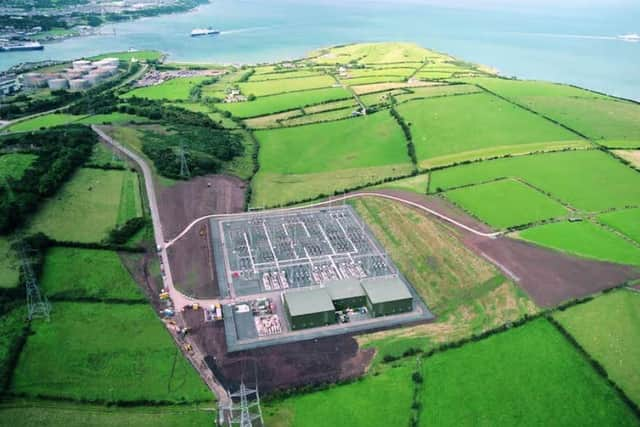
Mrs Armstrong says that renewable energy production here is limited by geography - and called for a change in how targets are calculated.
It raises fresh questions about whether the local legislation is remotely deliverable – with a legal target of an 80% reduction in emissions now less than five years away.
The Scottish government last year admitted it would not meet its 2030 targets, despite the country having far greater potential for renewable electricity generation than Northern Ireland.
While there is a growing acceptance amongst some ministers at the Executive that the targets won’t be met, there has been no public acknowledgement of that.
The fact that Northern Ireland cannot benefit from Scotland’s natural resources will raise further questions about the wisdom of Stormont pressing ahead with targets the UK Climate Change Committee warned were “ambitious” and risked damaging the credibility of the plans.Diana Armstrong, who sits on Stormont’s economy committee, has told the News Letter that the “flawed” energy rules are undermining Northern Ireland’s green goals.
The Fermanagh and South Tyrone MLA said: “When the Climate Change Act was passed during the last Assembly mandate, it set an ambitious target: 80% of our electricity consumption must come from renewable sources by 2030. It’s a high bar, perhaps even unreachable, but as it is enshrined in legislation, it must be achieved.
“Therefore, it is only reasonable to explore every available avenue to meet this goal, including building and expanding our green energy capacity at great expense, and of course, importing widely available renewable energy from our UK counterparts via the interconnector.
“However, we now face a bizarre situation where, for example, wind power generated in Scotland and imported to Northern Ireland via the interconnector could be classified as a fossil fuel under the Department for the Economy’s own statistics. This is because it is not categorised as ‘indigenous’ renewable generation and therefore cannot be counted towards our 2030 energy targets.“The rationale that only indigenous renewable generation should count is simply ludicrous and must be urgently reviewed by the Department. Northern Ireland is set to spend tens of millions of pounds in public money on expanding green energy in the coming years.
“While domestic renewable production is important, our geography amongst others limits certain types of renewable generation. We could be throwing money at projects that may not be necessary if we simply revised how we account for our energy consumption.“Including imported electricity via interconnectors in our renewable energy statistics would provide a much more realistic and accurate picture of our progress in meeting climate change targets.”
A year ago, the chair of Stormont’s environment committee said that is “near impossible” for Stormont to hit its target of reducing greenhouse gas emissions by 48% by 2030. Tom Elliott, now a peer, was reacting to an admission by the Scottish government that its 2030 target could not be reached.
In response to an Assembly question on the matter, economy minister Caoimhe Archibald said the Climate Change Act (Northern Ireland) 2022 “established a target for 80% of our electricity consumption to be from renewable sources by 2030.
“My Department publishes statistics on Electricity Consumption and Renewable Generation in Northern Ireland. The definition and coverage of the measure reported is: indigenous metered renewable generation as a proportion of metered electricity consumption.
“Electricity imported through interconnection does not therefore contribute towards the measure of performance against our renewable electricity target”.